C&I ESS Manufacturer Guide: Commercial Battery Systems 2026
C&I ESS Manufacturer Guide: Commercial Battery Systems 2026
What Is Commercial & Industrial Energy Storage? A Complete C&I ESS Manufacturer & Buyer’s Guide
Walk onto any mid-sized factory floor at 8:00 AM. Giant air compressors kick in, CNC machines spin up, and the facility’s utility meter starts spinning like crazy. For the plant owner, that morning power spike isn’t just noise—it is often the single most expensive fifteen minutes of the entire month.
That is the exact problem c&i energy storage systems are built to solve. Instead of paying punitive rates to the local utility company every time heavy machinery starts up, businesses now install their own commercial battery banks right behind the meter.
If you are an EPC contractor, an equipment distributor, or a business owner looking into storage for the first time, sorting through technical specs and supplier quotes can get overwhelming fast. Let’s break down how a commercial battery actually works on-site, where the real money is saved, and how to tell a genuine c&i ess manufacturer apart from a middleman trading company.
What Are C&I Energy Storage Systems and How Do They Work?
In plain English, Commercial and Industrial Energy Storage (C&I ESS) is a big rechargeable battery bank designed for businesses. While a home backup battery might hold 10kWh to keep your fridge and Wi-Fi running during a blackout, a commercial setup starts around 50kWh and easily scales into multiple megawatt-hours (MWh).
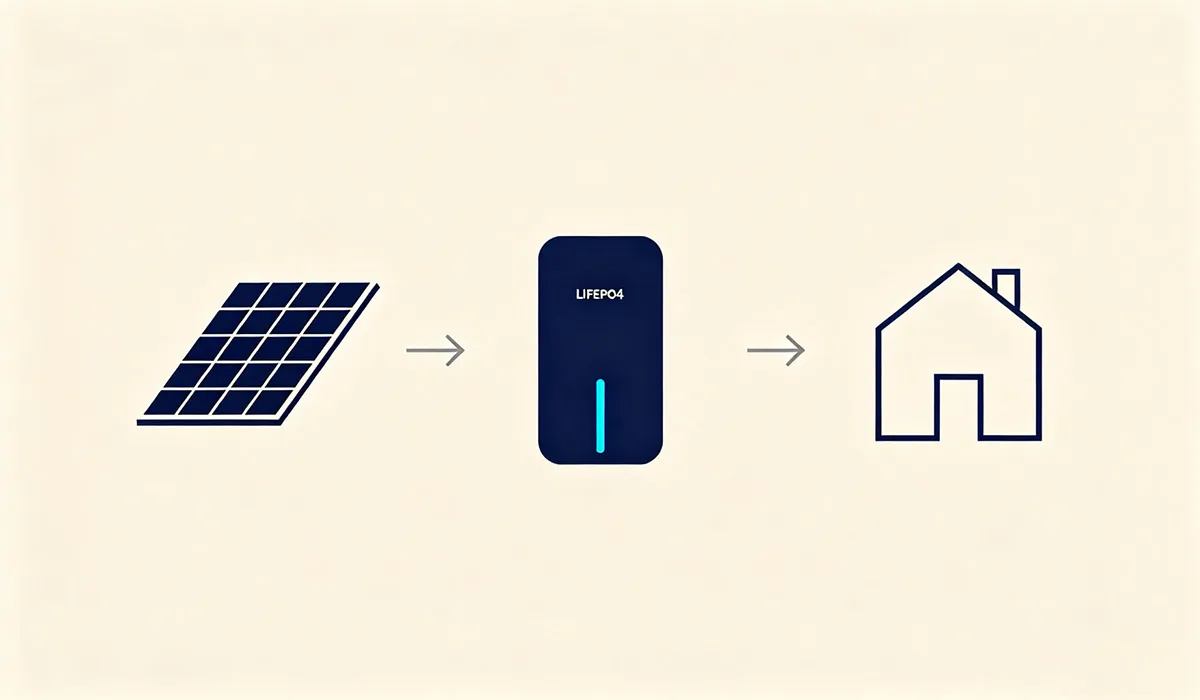
The daily operation is pretty straightforward. The system pulls in cheap electricity from the grid at night—or soaks up extra power from your rooftop solar panels at noon—and holds onto it. When utility rates spike in the late afternoon, or when the local grid goes down, the battery steps in to run your building.
Inside the Cabinet: Why LFP Cells Run the Show
Open up the heavy steel doors of any modern commercial battery cabinet and you will find stacks of Lithium Iron Phosphate (LiFePO4 or LFP) modules. A few years ago, some developers still debated between ternary lithium (NMC) and LFP. Today, that debate is over.
In c&i ess manufacturing, LFP is the undisputed king for one simple reason: safety. LFP chemistry is much harder to push into thermal runaway than cobalt-based batteries. Plus, Tier-1 prismatic LFP cells can handle 6,000 to 8,000 deep charge-and-discharge cycles before dropping to 80% capacity. That translates to 10 to 15 years of daily work in a factory yard.
The Brains Behind the Battery: BMS, PCS, and EMS
Stacking good battery cells together is only half the job. Without smart electronics managing the flow of electricity, a battery rack is just a very expensive brick. Every complete c&i battery system relies on three distinct hardware and software layers talking to each other in milliseconds:
- The BMS (Battery Management System): Think of the BMS as the safety watchdog. It checks the voltage and temperature of every single cell inside the pack. If one module gets too hot or charges faster than the rest, the BMS balances the load or shuts the circuit down before damage happens.
- The PCS (Power Conversion System): Batteries store power as Direct Current (DC), but your factory machinery runs on three-phase Alternating Current (AC). The PCS is a bi-directional inverter that flips DC to AC when discharging, and AC back to DC when charging.
- The EMS (Energy Management System): This is the software that actually makes you money. You feed your local utility tariff schedule and solar production data into the EMS, and it decides when to charge and when to dump power into your building loads.
Air Cooling vs. Liquid Cooling: Which One Makes Sense?
If you ask three different c&i ess factories for a quote on a 200kWh+ cabinet, you will likely get both air-cooled and liquid-cooled proposals. Which one do you actually need? It comes down to your local weather and how hard you plan to push the battery.
| What to Compare | Air-Cooled C&I Cabinets (50kWh–215kWh) | Liquid-Cooled C&I Cabinets (215kWh–372kWh+) |
|---|---|---|
| How It Cools | Industrial AC fans & internal air ducts | Chilled water-glycol plates touching the modules |
| Temp Gap Across Cells | Usually 5°C to 8°C difference | Kept tight within 2°C to 3°C |
| Cabinet Footprint | Slightly bulkier; needs room for airflow | About 30% smaller footprint for the same kWh |
| Parasitic Power Draw | Fans eat up more power on hot afternoons | Pumps use roughly 20% less auxiliary energy |
| Where It Fits Best | Milder climates, 1 cycle per day, tight budgets | Hot regions, heavy 2-cycle daily use, EV charging hubs |
Where Does the Payback Come From? 4 Real-World Use Cases
Most company directors don’t buy c&i energy storage systems just to look green in an annual report. They buy them because the math works. Depending on where your facility is located, a commercial battery pays for itself in four main ways.
Shaving Down Painful Monthly Demand Charges
If you ever look closely at an industrial electricity bill in Europe or North America, you’ll notice you aren’t just paying for the total kilowatt-hours (kWh) you use. You are also hit with a “demand charge” based on your highest 15-minute power peak (kW) during the month.
If your factory normally pulls 300kW, but spikes to 600kW for twenty minutes on a Tuesday morning, the utility bills you at that 600kW tier for the whole billing cycle. A c&i battery system watches your load meter in real time. The second your factory draw crosses 350kW, the battery discharges to cover the gap. The grid never sees the spike, and your demand charge drops by 30% to 50%.
Playing the Time-of-Use (TOU) Price Spread
In plenty of commercial districts, daytime peak electricity costs three or four times as much as midnight off-peak power. With an automated EMS, your battery buys cheap power at 2:00 AM and feeds it to your production lines at 2:00 PM. If you already have solar panels on the warehouse roof, the math gets even better. Instead of selling midday solar back to the grid for pennies, you bottle it up in your battery to cover the evening shift.
Avoiding Six-Figure Transformer Upgrades
Here is a scenario we see all the time: a logistics company wants to install six 120kW DC fast chargers for its new electric delivery trucks, or a plastics plant wants to add two new injection molding lines. They call the local utility, only to find out their existing 500kVA transformer is maxed out.
Upgrading a grid connection can easily cost $150,000+ and take 18 months of permitting. Dropping a 215kWh or 430kWh battery cabinet next to the main distribution board solves the bottleneck in a few weeks. The battery acts as an on-site buffer whenever the chargers or machines pull heavy loads.
Keeping the Lights On When the Grid Fails (Or Pairing with Diesel)
In regions with aging grids—or across fast-growing industrial zones in Africa, Southeast Asia, and parts of Eastern Europe—power outages are a daily headache. A single ten-minute brownout can ruin a whole batch of pharmaceutical ingredients or snap threads across a textile mill.
Commercial storage systems with UPS-grade switchover can pick up the load in under 20 milliseconds. And for off-grid mines or telecom sites running on diesel generators, adding a battery bank lets you turn the genset off during light loads. When the diesel engine does run, it runs at peak fuel efficiency to charge the battery, cutting monthly diesel bills by 25% to 35%.
How to Vet a C&I ESS Manufacturer Before You Wire a Deposit
Type c&i ess manufacturer into Google or walk the halls of any international solar trade show, and everyone claims to have the safest, longest-lasting cabinet on the market. But the truth is, a huge chunk of sellers are just small assembly workshops or pure trading companies slapping their logo on someone else’s enclosure.
If you are sourcing equipment for your clients or your own facility, here is what you actually need to check before signing a purchase order.
Cell Traceability and What Happens Inside C&I ESS Factories
Always ask where the lithium cells come from—and ask for proof. A serious manufacturer builds packs exclusively with brand-new, Grade-A cells from top-tier producers like Ganfeng Lithium, CATL, or EVE. Every single cell should have a laser-etched QR code on the top plate that traces back to the original production batch.
When you tour top c&i ess factories (even over a live WhatsApp or Zoom video call), look at their testing gear. Do they have automated cell-sorting machines to match internal resistance before welding? Do they run a 100% End-of-Line (EOL) full charge-and-discharge aging test on every completed rack? If a supplier skips full-cabinet aging tests to save time, walk away.
Paperwork That Actually Clears Customs and Fire Inspectors
You cannot legally connect a commercial battery to the grid—or get it insured—without real third-party safety certificates. Do not just accept a logo printed on a brochure; ask for the actual PDF test reports from labs like SGS or TÜV.
- IEC 62619: This is non-negotiable for industrial lithium batteries. It proves the cells and packs survived brutal short-circuit, drop, and thermal propagation tests.
- CE-LVD and CE-EMC: Required if you are shipping into any European port to prove low-voltage safety and ensure the inverter won’t interfere with nearby electronics.
- UN38.3 and MSDS: Without these, no shipping line will load your containers onto a vessel.
- Built-In Fire Protection: Check the cabinet spec sheet for multi-stage fire suppression. Good outdoor cabinets include smoke and heat sensors, combustible gas detectors, explosion-relief vents, and aerosol or perfluorohexanone (Novec 1230) fire extinguishers right inside the enclosure.
Inverter Compatibility and OEM/ODM Flexibility
For regional distributors and c&i ess exporters wholesalers, hardware flexibility is everything. One project might need an all-in-one cabinet with a built-in PCS, while the next customer wants a standalone high-voltage battery rack that talks to a Deye, Solis, GoodWe, or Victron hybrid inverter they already bought.
A capable factory has an in-house BMS engineering team that has already mapped out CAN and RS485 communication protocols for dozens of mainstream inverters. Having plug-and-play protocol selection right on the battery’s touch screen saves installers hours of frustrating troubleshooting in the field.
Dangerous Goods Shipping and Real After-Sales Support
A 215kWh outdoor battery cabinet weighs over two tons and ships as Class 9 Dangerous Goods (DG cargo). Experienced c&i ess exporters wholesalers know how to book DG vessel space, handle UN-certified crating, and provide accurate customs codes so your container doesn’t get stuck accruing demurrage fees at the destination port.
Also, ask how warranty claims work in year four or five. Does the factory offer cloud-based remote monitoring so their engineers can log in, read cell voltages, and push firmware updates remotely? That level of support is worth far more than saving $5 per kWh on the initial invoice.
Matching the Right Hardware Size to Your Project
Every facility has a different load curve, so there is no single “one-size-fits-all” battery. Usually, commercial projects fall into one of three hardware buckets:
50kWh to 100kWh High-Voltage Racks for Small Businesses
- What It Looks Like: Stackable or rack-mounted high-voltage battery modules paired with a 30kW to 50kW hybrid inverter.
- Who Uses It: Local supermarkets, cold-storage rooms, poultry farms, clinics, and small workshops.
- Why It Works: It fits neatly inside an existing electrical room. Because the modules are light enough for two technicians to lift, you don’t need to rent a crane for installation, and you can easily add extra battery bricks later.
100kW/215kWh & 125kW/261kWh All-in-One Outdoor Cabinets
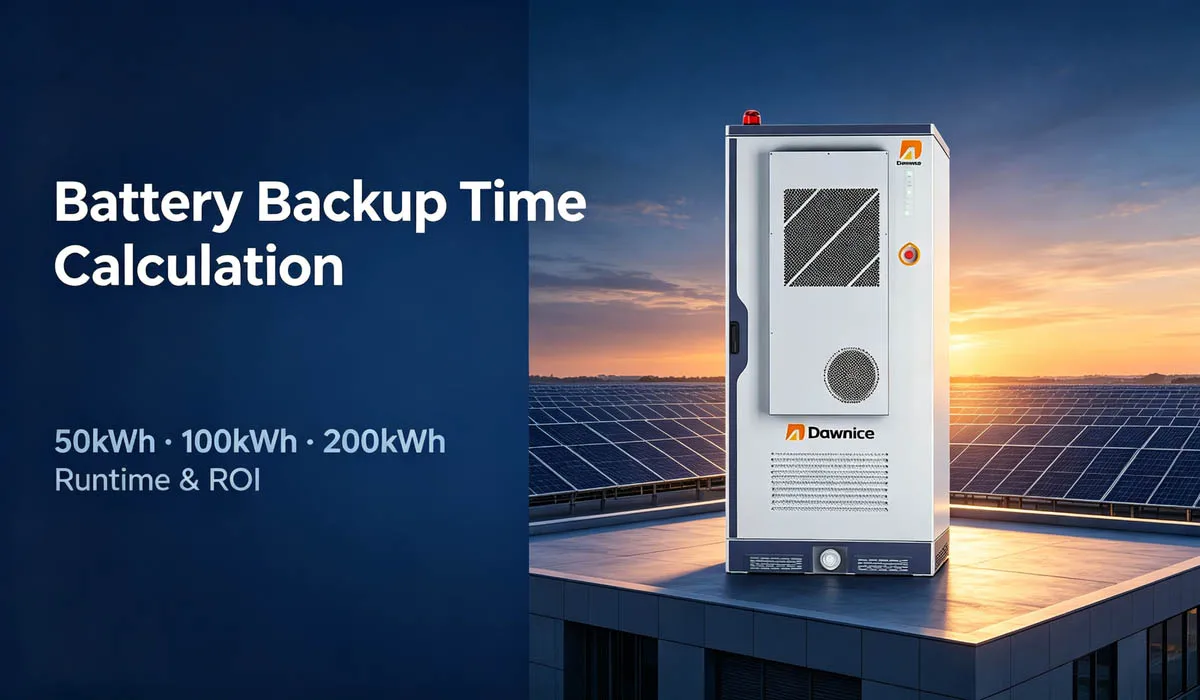
- What It Looks Like: A single, weatherproof IP54/IP55 outdoor steel cabinet roughly the size of two commercial refrigerators, holding the batteries, PCS, EMS, cooling system, and fire suppression all in one box.
- Who Uses It: Manufacturing plants, hotels, office complexes, and highway EV charging stations.
- Why It Works: This is the sweet spot of the C&I market right now. All internal wiring is done at the factory. Once the concrete pad is poured on-site, your electrician just runs the main AC power cables and communication lines. Need more capacity? You can parallel four, six, or ten cabinets together to reach 1MWh to 2.5MWh.
1MWh to 5MWh+ Containerized Systems for Heavy Industry
- What It Looks Like: 20-foot or 40-foot shipping containers packed with liquid-cooled battery clusters, paired with an external skid-mounted central PCS and step-up transformer.
- Who Uses It: Steel and cement plants, large industrial parks, data centers, and solar-plus-storage microgrids.
- Why It Works: At the multi-megawatt scale, containerized systems drive down the balance-of-system (BOS) cost per kWh and let large industrial users participate in utility frequency regulation and grid capacity markets.
Common Questions We Hear from C&I Buyers (FAQ)
How long does it actually take for a commercial battery to pay for itself?
In most commercial markets with decent peak-to-valley electricity price gaps or high demand charges, payback takes 3 to 5 years. If your local government offers green tax credits, accelerated depreciation, or storage subsidies, we regularly see payback drop under 3 years. After that point, the system generates pure operational savings for the rest of its 10-to-15-year service life.
How can I tell if I’m talking to a real C&I ESS factory or a reseller?
Ask for two things: a live video call walking through their module laser-welding and cabinet aging-test lines, and a copy of their SGS IEC 62619 certificate. Check the exact company name printed on that safety certificate—if it doesn’t match the company name on your proforma invoice, you are dealing with a reseller or trading company.
Can we add a C&I battery system to a factory that already has rooftop solar?
Yes, easily. You don’t need to rip out your existing grid-tied solar inverters. By using an AC-coupled all-in-one battery cabinet, your installer wires the storage unit directly into your building’s main AC distribution panel. Current transformers (CT clamps) placed at your grid meter tell the battery whenever your solar panels are producing excess power, so it charges up automatically.
Looking for a Direct Quote or System Sizing Help?
Every factory load profile is a little different, and guessing on battery capacity is an expensive mistake. Whether you are pricing out a 215kWh cabinet for a local client or sourcing container loads as a regional distributor, working directly with an experienced c&i ess manufacturer saves you headaches on both engineering and cost. Send our engineering team your project specs or a recent electricity bill today, and we will put together a custom sizing layout and factory-direct wholesale quote within 24 hours.