Top 10 Energy Storage Battery Manufacturers in the USA
Top 10 Energy Storage Battery Manufacturers in the USA
Top 10 Energy Storage Battery Manufacturers in the USA (2026)
The demand for reliable battery energy storage is growing across the United States. From utility-scale renewable energy projects to commercial facilities, factories, data centers, and residential solar installations, battery storage is becoming an increasingly important part of modern power infrastructure.
As the market expands, choosing the right supplier is no longer just about battery capacity or price. Buyers also need to evaluate manufacturing capabilities, battery chemistry, system integration, safety certifications, project experience, warranty conditions, and long-term technical support.
But who are the leading energy storage battery manufacturers serving the US market in 2026? This guide introduces ten companies with different strengths across battery manufacturing, energy storage systems, and large-scale BESS integration. It also explains what buyers should consider before selecting a supplier.
Important note: This is an editorial buyer’s guide, not an official market-share ranking. The list includes both US-based companies and international manufacturers supplying the US market. Some companies manufacture battery cells, while others specialize in complete battery systems, power conversion, or project integration. Their business models are therefore not directly interchangeable.
How We Selected These Energy Storage Battery Manufacturers
A company that produces battery cells does not necessarily provide a complete energy storage system. Similarly, a BESS integrator may design and deliver an entire project while sourcing battery cells from other manufacturers. Understanding this difference is essential when comparing suppliers.
The companies in this list were selected based on several practical considerations:
- Manufacturing and technology: Battery chemistry, production capabilities, product development, and quality management.
- Energy storage portfolio: Residential batteries, commercial and industrial ESS, utility-scale BESS, or battery cells and modules.
- Market presence: Experience supplying energy storage products or delivering projects in the United States and international markets.
- System integration: Battery management systems, power conversion systems, energy management software, and system-level engineering.
- Project suitability: The ability to support different applications, capacities, installation environments, and customer requirements.
- Long-term support: Warranty structure, technical documentation, maintenance, commissioning, and after-sales service.
These criteria help distinguish a battery cell supplier from a complete energy storage solution provider. For buyers, that distinction can have a direct impact on project cost, delivery schedules, system compatibility, and long-term operation.
Top 10 Energy Storage Battery Manufacturers in the USA (2026)
The following companies represent different parts of the energy storage supply chain. Some are established global battery manufacturers, while others focus on integrated storage platforms or project-level solutions.
1. Tesla Energy
Headquarters: Austin, Texas, USA
Main Business: Integrated battery energy storage systems
Key Products: Megapack, Powerwall
Tesla Energy is one of the most recognizable names in the US battery storage market. Its energy business covers residential energy storage, commercial applications, and utility-scale battery systems. Rather than focusing exclusively on battery cell production, Tesla offers integrated storage products designed to work with its power electronics, software, and energy management ecosystem.
The Megapack platform is designed for large-scale energy storage projects. Utilities, renewable energy developers, and grid operators can use these systems for applications such as renewable energy integration, peak demand management, and grid support. At the residential level, Powerwall provides home energy storage for customers looking to increase solar self-consumption and maintain backup power.
One of Tesla’s major strengths is its integrated approach. Hardware, software, monitoring, and system operation are developed within a connected product ecosystem. This can simplify procurement and project coordination for customers seeking a standardized solution.
Best suited for: Utility-scale storage projects, grid-connected battery installations, and residential energy storage customers looking for an integrated product ecosystem.
Buyer consideration: Tesla’s integrated product approach may be attractive for standardized projects, but buyers should evaluate project availability, commercial terms, system configuration, and service arrangements before making a procurement decision.
2. CATL (Contemporary Amperex Technology Co., Limited)
Headquarters: Ningde, Fujian, China
Main Business: Lithium-ion battery cells and energy storage systems
Key Business Areas: LFP battery technology, battery modules, and utility-scale storage solutions
CATL is one of the world’s largest battery technology companies and an important supplier in the global energy storage industry. Its business covers battery research, cell manufacturing, battery systems, and energy storage solutions for multiple applications.
For stationary energy storage, CATL’s portfolio includes lithium iron phosphate battery technologies and large-scale storage solutions. LFP chemistry is widely used in stationary storage because of its thermal stability characteristics, cycle-life potential, and suitability for applications requiring frequent charging and discharging.
CATL is particularly relevant to large project developers, system integrators, and energy storage companies that need high-volume battery cell supply. Its manufacturing scale and battery technology development make it an important participant in the global BESS supply chain.
However, buyers should distinguish between purchasing CATL battery cells and purchasing a fully integrated energy storage system. Depending on the project, additional engineering may be required for battery racks, BMS, PCS, thermal management, fire protection, and energy management systems.
Best suited for: Large battery procurement programs, utility-scale storage developers, and system integrators looking for established battery cell technology.
Buyer consideration: Confirm the exact cell model, supply arrangement, product traceability, warranty responsibilities, and whether the supplier provides cells only or a complete system.
3. Dawnice
Headquarters: Yichun, Jiangxi Province, China
Main Business: Residential and commercial & industrial energy storage systems
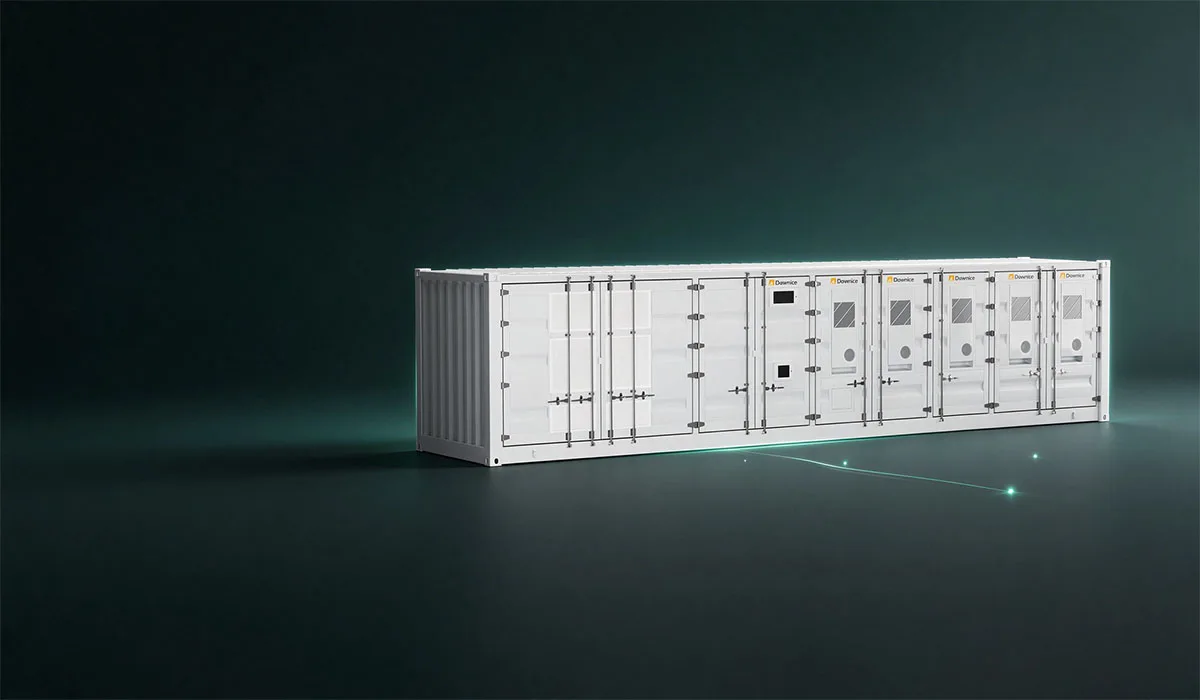
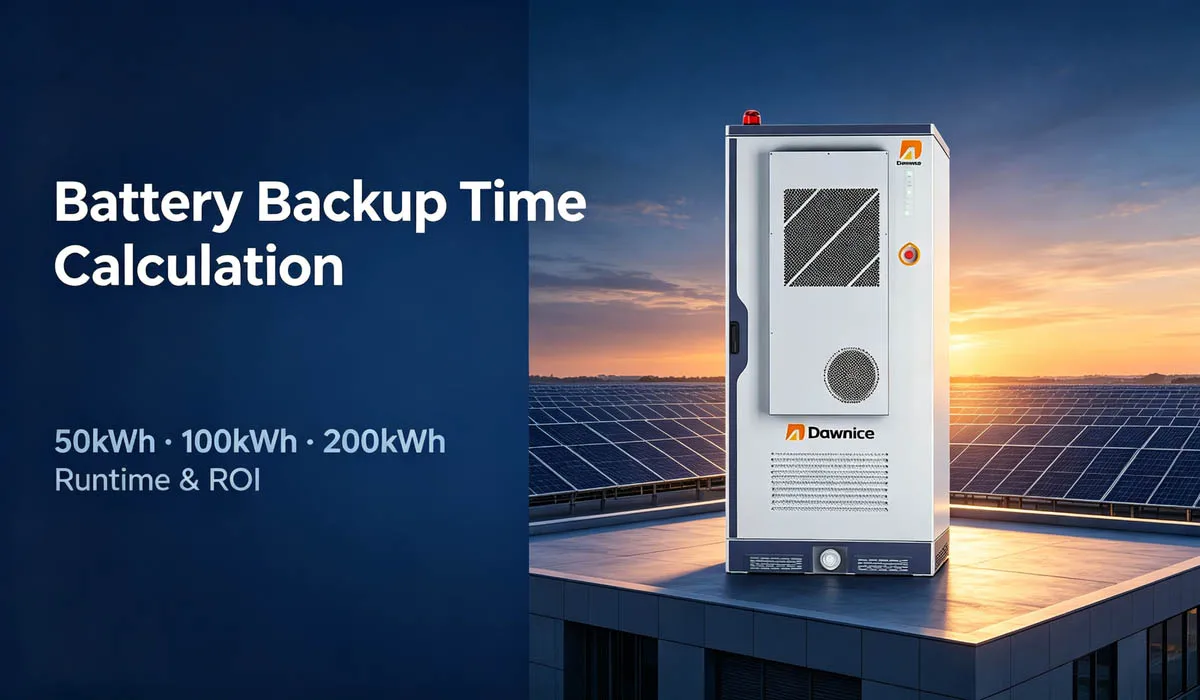
Key Products: LiFePO4 battery systems, high-voltage ESS, outdoor battery cabinets, and containerized energy storage solutions
Manufacturing Capacity: 2 GWh annual capacity stated on its manufacturing factory page
Dawnice is an international energy storage manufacturer focused on residential and commercial & industrial battery storage solutions. Headquartered in Yichun, Jiangxi, China, the company develops and manufactures lithium battery energy storage products for distributors, installers, project developers, and commercial customers across global markets.
Unlike companies that mainly supply battery cells or focus on utility-scale project integration, Dawnice places particular emphasis on configurable battery systems for residential and C&I applications. Its product portfolio covers different storage capacities, installation environments, and system configurations, allowing partners to select products according to local electricity conditions and project requirements.
Manufacturing and production capabilities
Dawnice operates a manufacturing base in Yichun with dedicated production lines, in-house quality control, R&D resources, and production traceability. Its official manufacturing information states an annual production capacity of 2 GWh and more than 15 years of lithium battery industry experience within its team.
The manufacturing portfolio covers products ranging from residential battery systems to commercial and industrial storage solutions, with customized OEM and ODM projects also available. This product range is relevant to overseas distributors and energy companies that need more than one battery capacity or installation format from a single supplier.
For B2B buyers, production capacity is only one part of supplier evaluation. It is also important to understand how a manufacturer manages incoming cell inspection, battery pack assembly, BMS configuration, finished-product testing, packaging, and shipment documentation. Buyers should request the relevant quality records and technical documents for the specific model being considered.
Residential energy storage solutions
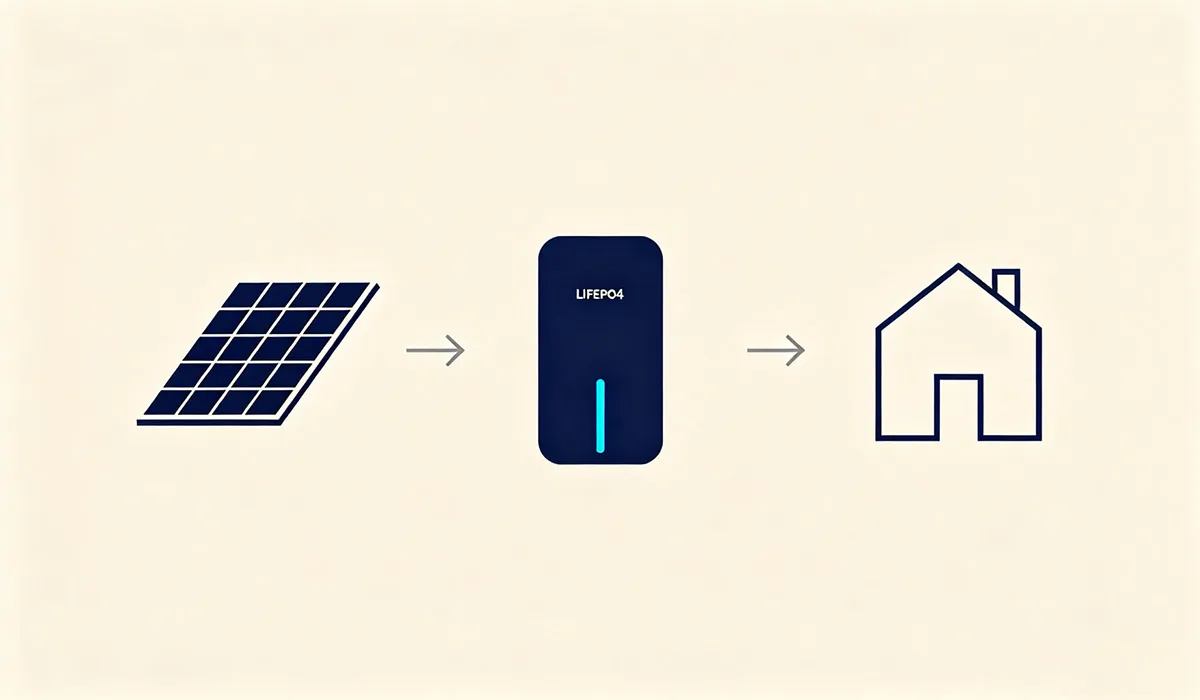
Dawnice offers residential LiFePO4 battery products designed for solar self-consumption, backup power, and off-grid applications. Depending on the model, systems can support wall-mounted, floor-standing, or modular configurations.
For example, its PowerFly product family covers residential storage capacities from approximately 5 kWh to 20 kWh, with selected models supporting parallel expansion. This gives installers and distributors flexibility when serving households with different daily electricity consumption levels.
For residential projects, buyers should check battery voltage, usable capacity, continuous charge and discharge power, inverter compatibility, communication protocols, enclosure protection, and the number of supported parallel units. These details are more useful than comparing nominal capacity alone.
Commercial and industrial energy storage solutions
For commercial customers, Dawnice provides higher-capacity battery storage products for applications such as peak shaving, solar energy storage, backup power, and energy management. Depending on the system architecture, these solutions can be considered for factories, warehouses, hotels, commercial buildings, and other facilities with substantial electricity demand.
The company also offers outdoor cabinet and larger-scale energy storage configurations. For projects that require customized capacity, installation layout, or integration with existing solar and power systems, buyers can discuss OEM/ODM requirements with the manufacturer.
A practical example is a factory with high daytime electricity consumption and a solar PV installation. A properly sized battery system can store excess solar generation and discharge during periods of higher electricity demand. The actual financial benefit depends on the site’s load profile, electricity tariff, demand charges, system efficiency, and local regulations.
Global distribution and project support
Dawnice states that its products serve customers in more than 150 countries and that it has established over 30 local service centers. This international network is relevant to distributors and installers that need ongoing communication, technical assistance, and product support beyond the initial shipment.
For US buyers, however, global coverage should not automatically be interpreted as a US-based service facility or local inventory. Before placing an order, purchasers should confirm the actual US distribution arrangement, delivery lead time, warranty claim process, spare-parts availability, technical response times, and the party responsible for commissioning and maintenance.
Why consider Dawnice?
- Residential and C&I energy storage product coverage from smaller battery systems to larger storage configurations.
- LiFePO4 battery solutions for solar storage, backup power, and commercial energy management applications.
- OEM/ODM cooperation for distributors, installers, and project-based buyers.
- Manufacturing operations with stated 2 GWh annual capacity and in-house quality control.
- International distribution experience and a stated network of more than 30 local service centers.
- Product configuration options for different installation environments and project requirements.
Best suited for: Energy storage distributors, solar installers, residential ESS suppliers, and commercial project buyers looking for configurable LiFePO4 battery systems and OEM/ODM cooperation.
Buyer consideration: Dawnice is headquartered in China, not the United States. US buyers should independently verify the applicable product certifications, import requirements, local service arrangements, inverter compatibility, warranty coverage, and project-specific compliance before procurement.
For businesses evaluating residential or commercial energy storage products, visit Dawnice to explore its battery portfolio or discuss a project-specific configuration.
4. Fluence Energy
Headquarters: Arlington, Virginia, USA
Main Business: Battery energy storage system integration and software
Key Areas: Grid-scale storage, energy management, and digital optimization
Fluence Energy is a major energy storage technology and system integration company serving utilities, renewable energy developers, and large power infrastructure projects. Its business combines battery storage hardware, software, controls, and services.
The company is particularly relevant to utility-scale battery projects where system performance depends on more than battery capacity. Grid connection, dispatch strategy, power conversion, system controls, and operational optimization all influence project economics.
Fluence’s digital platform and energy storage integration capabilities help customers manage storage assets and participate in different electricity market applications. Its role is therefore closer to that of a complete BESS solution provider than a traditional battery cell manufacturer.
Best suited for: Utilities, independent power producers, renewable energy developers, and large-scale grid storage projects.
Buyer consideration: Evaluate the complete project scope, software licensing, performance guarantees, integration responsibilities, and long-term service agreement.
5. Sungrow
Headquarters: Hefei, Anhui, China
Main Business: Solar inverters and integrated energy storage systems
Key Areas: Utility-scale BESS, C&I storage, and solar-plus-storage
Sungrow is a global power electronics and renewable energy technology company with a strong presence in solar inverters and energy storage systems. Its experience in power conversion gives it an important position in projects where solar generation and battery storage need to operate together.
Its energy storage portfolio includes solutions for utility-scale and commercial applications. These systems can support renewable energy integration, peak load management, and grid-connected storage projects.
For project developers, Sungrow’s combination of inverter technology and storage solutions can simplify the integration of solar PV and battery systems. Its global project experience also makes it a relevant supplier for EPC contractors and energy companies comparing turnkey storage solutions.
Best suited for: Solar-plus-storage projects, utility-scale BESS, and commercial energy storage installations.
Buyer consideration: Confirm system architecture, PCS ratings, grid compliance, battery supplier, local technical support, and the division of responsibilities between equipment suppliers and EPC contractors.
6. BYD Energy Storage
Headquarters: Shenzhen, Guangdong, China
Main Business: Battery manufacturing and energy storage systems
Key Areas: LFP battery technology, commercial storage, and utility-scale BESS
BYD is a vertically integrated battery and electric vehicle manufacturer with a significant presence in stationary energy storage. Its battery business covers battery technologies, energy storage products, and systems for residential, commercial, and utility applications.
One of BYD’s strengths is its experience across battery development and manufacturing. Its LFP battery technology is used in energy storage applications where safety characteristics, durability, and repeated cycling are important considerations.
For buyers, BYD can be relevant when evaluating integrated battery solutions or sourcing from a company with a broad battery manufacturing background. Its global business also gives it visibility across multiple energy storage markets.
Best suited for: Residential storage, commercial battery systems, and large-scale energy storage projects.
Buyer consideration: Review the specific product platform, system configuration, warranty conditions, and applicable US procurement and compliance requirements.
7. LG Energy Solution
Headquarters: Seoul, South Korea
Main Business: Advanced battery cell and energy storage solutions
Key Areas: Lithium-ion battery technology and stationary energy storage
LG Energy Solution is an established global battery manufacturer supplying battery technologies for electric vehicles and stationary energy storage. Its experience in cell chemistry, battery engineering, and large-scale production makes it an important company in the global battery supply chain.
In the energy storage sector, battery performance needs to be evaluated across several factors, including usable energy, power output, thermal management, operating temperature, cycle life, and safety design. LG Energy Solution’s battery development capabilities make it relevant to system manufacturers and project developers seeking established lithium-ion technology.
The company is also relevant to the North American battery supply chain, where domestic production, sourcing strategies, and supply-chain resilience have become increasingly important considerations.
Best suited for: Battery system manufacturers, large energy storage developers, and buyers looking for established lithium-ion battery technology.
Buyer consideration: Check the specific stationary storage product offering, cell format, supply availability, manufacturing origin, and project-level warranty terms.
8. Samsung SDI
Headquarters: Yongin, South Korea
Main Business: Rechargeable battery manufacturing
Key Areas: Lithium-ion battery cells and energy storage systems
Samsung SDI is a major battery technology company with experience in rechargeable battery development and manufacturing. Its business includes batteries for electric vehicles, energy storage systems, and other industrial applications.
In stationary energy storage, Samsung SDI’s battery technologies are relevant to projects that require reliable battery performance, system-level safety engineering, and established manufacturing processes.
The company’s experience in battery materials, cell design, and manufacturing quality makes it an important participant in the global battery industry. For US buyers, its position should be assessed in the context of the exact product platform and current supply arrangements.
Best suited for: Energy storage system developers, industrial battery applications, and projects requiring established lithium-ion battery technology.
Buyer consideration: Request current product specifications and confirm whether the commercial offer covers battery cells, modules, racks, or a complete energy storage system.
9. Powin
Headquarters: Portland, Oregon, USA
Main Business: Battery energy storage system integration
Key Areas: Utility-scale storage and modular BESS platforms
Powin is a US-based energy storage company known for its focus on battery energy storage systems and project integration. Its business is centered on delivering storage platforms for utility-scale and large commercial energy applications.
Large battery projects require coordination across battery modules, thermal management, power conversion, controls, and system-level safety. Powin’s role in the market is to bring these elements together into storage systems that can be deployed and operated as part of a larger energy infrastructure project.
For developers and utilities, system integration experience is particularly important when a project needs to meet grid requirements, operate under specific dispatch strategies, or connect with renewable generation assets.
Best suited for: Utility-scale storage developers, grid-connected projects, and large energy infrastructure customers.
Buyer consideration: Assess current corporate and project delivery status, equipment sourcing, system warranties, and the contractual responsibilities of each project partner.
10. Wärtsilä Energy Storage
Headquarters: Helsinki, Finland
Main Business: Energy storage integration and power system optimization
Key Areas: Utility-scale BESS, hybrid power plants, and energy management software
Wärtsilä is an international energy technology company with experience in power generation, energy storage, and power system optimization. Its energy storage business focuses on integrating battery systems with software and control technologies for grid-connected and hybrid power applications.
The company’s GEMS energy management platform is designed to help coordinate energy assets and optimize system operation. This is particularly relevant for projects that combine battery storage with renewable generation, conventional power generation, or complex grid requirements.
Rather than competing primarily as a battery cell manufacturer, Wärtsilä’s value is in system integration, controls, and power system expertise. Its solutions are relevant to energy developers that need to manage multiple assets within one operating environment.
Best suited for: Utility-scale storage, hybrid power plants, and complex energy infrastructure projects.
Buyer consideration: Evaluate software capabilities, system integration scope, project engineering, performance guarantees, and long-term service arrangements.
Comparison of the Top 10 Energy Storage Battery Manufacturers
The following table provides a simplified comparison of the companies based on their primary business focus. It is intended as an initial supplier screening tool, not a technical specification or product performance ranking.
| Company | Headquarters | Main Business | Typical Application |
|---|---|---|---|
| Tesla Energy | USA | Integrated storage systems | Residential and utility-scale |
| CATL | China | Battery cells and ESS | Utility and large-scale storage |
| Dawnice | China | Residential and C&I ESS | Home, commercial and industrial |
| Fluence | USA | BESS integration and software | Grid-scale storage |
| Sungrow | China | Inverters and ESS | Solar-plus-storage and utility |
| BYD Energy Storage | China | Battery manufacturing and ESS | Residential, C&I and utility |
| LG Energy Solution | South Korea | Battery cells and systems | Stationary energy storage |
| Samsung SDI | South Korea | Rechargeable batteries | Industrial and stationary ESS |
| Powin | USA | BESS integration | Utility-scale storage |
| Wärtsilä | Finland | Energy storage integration | Grid and hybrid power systems |
Note: Company locations and business descriptions are provided for general comparison. Product availability, manufacturing locations, and commercial offerings may change. Confirm current details directly with each supplier.
How to Choose the Right Battery Energy Storage Manufacturer
The largest company is not automatically the best supplier for every project. A utility developer, a solar installation company, and a factory owner have very different technical and commercial requirements.
Before selecting an energy storage battery manufacturer, buyers should evaluate the following factors.
1. Identify Whether You Need Battery Cells or a Complete ESS
This is the first question to clarify. Battery cell manufacturers supply the core battery components, while system manufacturers and integrators may provide battery packs, racks, cabinets, power conversion, controls, and other components.
If your company already has engineering and integration capabilities, sourcing battery cells or modules may be appropriate. If you are an installer, distributor, or project owner, a more complete battery system may reduce integration work and simplify supplier coordination.
2. Compare Battery Chemistry and Performance
Lithium iron phosphate (LiFePO4 or LFP) is widely used in stationary energy storage because of its thermal stability characteristics and suitability for repeated cycling. Other lithium-ion chemistries may offer different energy density or performance characteristics.
Do not compare battery suppliers using cycle-life claims alone. Ask for the test conditions behind the figures, including depth of discharge, operating temperature, charge and discharge rate, and end-of-life capacity definition.
3. Verify Certifications and US Project Compliance
For projects in the United States, product certification and system-level compliance must be considered early in the procurement process. Depending on the application and installation, relevant standards and requirements may include UL 1973, UL 9540, UL 9540A testing, NFPA 855, and applicable electrical and fire codes.
These standards do not all serve the same purpose. For example, UL 9540 relates to energy storage system safety, while UL 9540A is a test method used to evaluate thermal runaway fire propagation characteristics. The exact requirements depend on the project design, authority having jurisdiction, and adopted code edition.
A supplier should provide current, model-specific documentation rather than relying on general statements that its products are certified. Buyers should verify the certificate holder, covered model numbers, test scope, and installation conditions.
4. Evaluate Manufacturing Quality and Traceability
Manufacturing quality has a direct impact on battery consistency and long-term reliability. Buyers should understand how the manufacturer manages battery cell sourcing, incoming inspection, pack assembly, welding, insulation testing, BMS programming, finished-product testing, and serial-number traceability.
A factory visit or third-party inspection can provide useful information about actual production conditions. For larger orders, consider requesting sample testing, factory audit records, quality control procedures, and a clearly defined acceptance inspection plan.
5. Check Inverter Compatibility and System Integration
A battery system must communicate correctly with its inverter or PCS. Voltage range, current limits, communication protocols, charge and discharge settings, and BMS compatibility all need to be confirmed.
For commercial projects, also consider whether the system supports the required operating modes, such as grid-connected operation, backup power, peak shaving, demand response, or microgrid operation.
6. Understand Warranty and After-Sales Responsibilities
A battery warranty should clearly define the warranty period, energy throughput or cycle limitations, retained capacity, operating conditions, exclusions, and claim procedures. A ten-year warranty, for example, is not meaningful without understanding the conditions under which it applies.
For US projects involving overseas suppliers, buyers should also confirm who handles technical troubleshooting, spare parts, product replacement, commissioning support, and on-site service.
Which Type of Manufacturer Is Best for Different Energy Storage Projects?
Different suppliers are suited to different applications. The following overview can help narrow down the initial shortlist.
| Project Type | Supplier Type to Consider | Key Evaluation Points |
|---|---|---|
| Residential solar storage | Residential ESS manufacturer | Usable capacity, inverter compatibility, backup capability |
| Commercial buildings | C&I ESS manufacturer or integrator | Peak shaving, power rating, EMS, safety |
| Factories and industrial facilities | C&I BESS solution provider | Load profile, demand charges, integration, scalability |
| Utility-scale storage | Large battery supplier or BESS integrator | Grid compliance, system efficiency, dispatch, guarantees |
| Battery distribution business | OEM/ODM battery manufacturer | Product range, pricing, supply stability, warranty support |
Frequently Asked Questions About Energy Storage Battery Manufacturers
Who are the top energy storage battery manufacturers in the USA?
Several major companies participate in the US energy storage market, including Tesla Energy, Fluence, CATL, Sungrow, BYD, LG Energy Solution, Samsung SDI, Powin, and Wärtsilä. International manufacturers such as Dawnice also supply residential and commercial energy storage products to global markets. These companies have different business models, so buyers should compare them according to their actual project requirements.
Which companies manufacture battery energy storage systems rather than just battery cells?
Companies such as Tesla Energy, Sungrow, BYD, and Dawnice offer energy storage products or integrated systems. Fluence, Powin, and Wärtsilä are more closely associated with system integration, software, and project-level energy storage solutions. CATL, LG Energy Solution, and Samsung SDI have major battery manufacturing businesses. However, product scope can vary by region and project.
What is the difference between a battery manufacturer and a BESS integrator?
A battery manufacturer produces battery cells, modules, packs, or complete battery systems. A BESS integrator combines batteries with power conversion systems, thermal management, controls, energy management software, and other components to create an operational energy storage solution. Some companies perform both roles, while others specialize in only one part of the supply chain.
Is LiFePO4 suitable for commercial and industrial energy storage?
LiFePO4 is widely used in commercial and industrial energy storage because of its thermal stability characteristics and suitability for frequent cycling. It can be used for applications such as solar energy storage, peak shaving, and backup power. The final choice should still consider system design, operating temperature, power requirements, safety engineering, and project economics.
How do I choose a reliable energy storage battery supplier?
Start by checking the supplier’s manufacturing capabilities, product specifications, quality management procedures, certifications, warranty conditions, and project references. For commercial projects, also verify inverter compatibility, BMS communication, system integration responsibilities, and after-sales support. Request model-specific technical documents before signing a purchase agreement.
Can international battery manufacturers supply energy storage products to the US market?
Yes. International manufacturers supply battery cells, modules, and complete energy storage products to different markets, including the United States. However, buyers must evaluate import duties, country-of-origin requirements, applicable certifications, project procurement restrictions, local installation codes, and any sourcing conditions associated with their project or funding program.
What certifications should I check when purchasing a battery energy storage system in the United States?
Depending on the product and installation, relevant documents may include UL 1973, UL 9540, UL 9540A test reports, and compliance with applicable NFPA and electrical codes. Not every standard applies to every product in the same way. Buyers should confirm requirements with the system supplier, project engineer, and local authority having jurisdiction.
Final Thoughts: Finding the Right Energy Storage Battery Manufacturer
The US energy storage market includes a wide range of companies, from battery cell manufacturers to integrated BESS providers and software-focused system integrators. Tesla, CATL, Fluence, Sungrow, BYD, LG Energy Solution, Samsung SDI, Powin, and Wärtsilä each bring different capabilities to the industry.
For buyers looking for residential and commercial LiFePO4 battery systems, Dawnice is another manufacturer worth evaluating. Its product portfolio, stated manufacturing capacity, and OEM/ODM capabilities make it relevant to distributors, installers, and commercial project buyers seeking configurable energy storage solutions.
Ultimately, the right supplier is the one that can meet your technical requirements, provide transparent product documentation, support the project’s compliance needs, and deliver reliable service throughout the system’s operating life.
Looking for a Reliable Energy Storage Battery Manufacturer?
Whether you are developing a residential solar storage business, sourcing batteries for commercial projects, or looking for an OEM/ODM manufacturing partner, Dawnice can help you explore suitable LiFePO4 energy storage configurations.
Share your required battery capacity, application, inverter brand, estimated order quantity, and destination. Our team can help identify a suitable product configuration for your project.