Blog
Blog
Solar Panel Output Per Square Meter
Published by Dawnice, April 30, 2025
Solar panels have become a cornerstone of renewable energy, but many wonder: How much electricity can one square meter of solar panels generate?
Quick Answer: Under Standard Test Conditions (STC), 1 square meter of standard solar panels can deliver approximately 150 to 200 W/m² of peak power. With around 5 peak sun hours per day, this translates to roughly 0.75 to 1 kWh of daily energy production. High-efficiency monocrystalline panels can achieve 220-300 W/m².
Let’s break down the science behind photovoltaic efficiency.
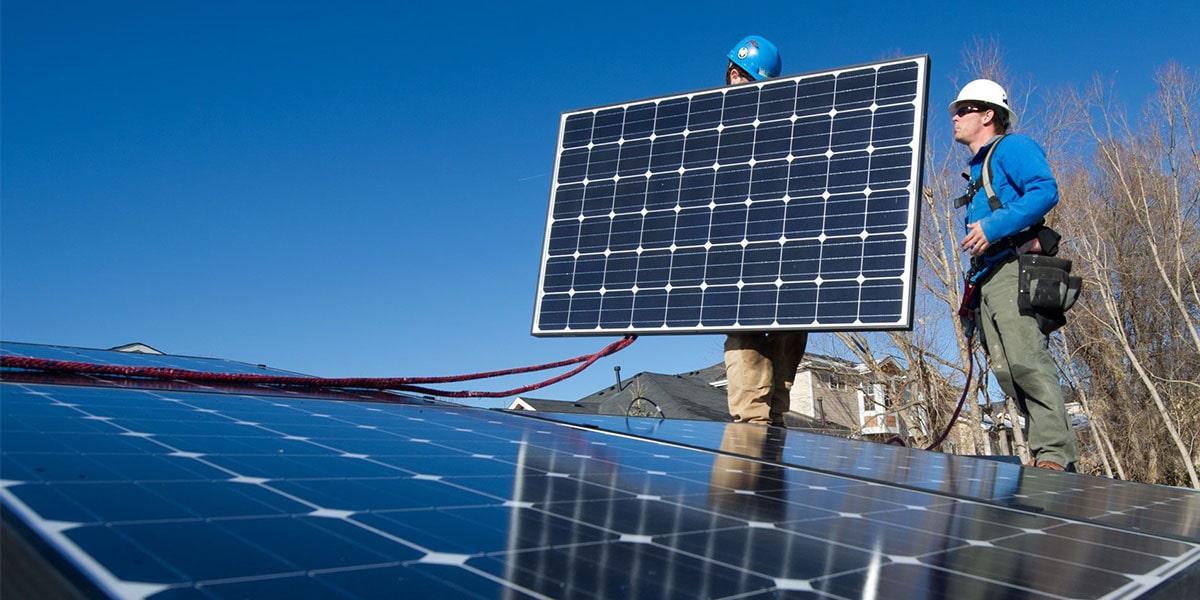
Part 1: The Power Equation of Solar Panels
1. Power Density
- Standard polycrystalline panels: 150-200 W/m² (≈14-19 W/sq.ft)
- High-efficiency monocrystalline panels: 220-300 W/m² (≈20-28 W/sq.ft)
- Cutting-edge lab prototypes: 400 W+/m² (achieved with tandem cell technology)
2. Daily Energy Output
Under optimal conditions (approximately 5 peak sun hours per day):
- 1m² standard panel: 0.75-1 kWh/day
- 1 sq.ft: 0.07-0.09 kWh/day
3. Instantaneous Power Output
At noon under direct sunlight (under ideal conditions):
- Monocrystalline: 220-300 W/m²
- Polycrystalline: 150-200 W/m²
*Note: 1m² = 10.76 sq.ft; values rounded for clarity.
Part 2: 5 Key Factors Affecting Solar Efficiency
1. Sunlight Intensity
- Equatorial regions yield 40%-60% more energy annually than high-latitude areas.
- Cloudy days can reduce solar energy production by 50%-80%.
2. Panel Technology Comparison
| Type | Efficiency | Peak Power Output (W/m²) | Key Features |
|---|---|---|---|
| Monocrystalline | 20%-23% | 220-300 W/m² | High efficiency, durable |
| Polycrystalline | 15%-18% | 150-200 W/m² | Cost-effective solution |
| Thin-film | 10%-12% | 80-120 W/m² | Flexible, better low-light performance |
3. Installation Precision
- Optimal tilt angle ≈ local latitude ±5°.
- A 15° orientation error may reduce energy production by approximately 3%.
- Regular cleaning can improve energy output by 5%-15%.
4. Temperature Impact
- Solar panel efficiency typically drops by 0.4%-0.5% for every 1°C increase in cell temperature.
- Advanced cooling systems can improve annual energy yield by 8%-12%.
5. Shadow Penalty
- Even 10% shading can result in up to 50% power loss, depending on the panel configuration.
- Micro-inverters and power optimizers can significantly reduce shading losses.
Part 3: Future Tech Breakthroughs
1. Tandem Solar Cells
Multi-layer solar cells that absorb a broader spectrum of sunlight have achieved laboratory efficiencies of up to 39.7% (2023 data) and are expected to enter commercial production by around 2030.
2. AI-Powered Tracking
Dual-axis tracking systems combined with AI algorithms can increase annual energy generation by approximately 35%-45%.
3. Building-Integrated Photovoltaics (BIPV)
Solar roof tiles and transparent photovoltaic panels can achieve efficiencies of 15%-18% while maintaining architectural aesthetics.
4. Storage Synergy
Pairing solar systems with next-generation solid-state batteries can increase household self-consumption rates from roughly 30% to over 80%.
Part 4: Real-World Applications
1. Residential Rooftop Example
- 20m² roof (215 sq.ft)
- Approximately 4kW installed solar capacity
- Annual electricity generation: 5,000-6,000 kWh
- Enough to supply around 80% of the electricity needs of a typical four-person household.
2. Commercial Solar Farm
- 10,000m² installation (107,600 sq.ft)
- Approximately 2MW installed capacity
- Annual electricity generation: 2.4-3 million kWh
- Equivalent to offsetting approximately 1,800 tons of CO₂ emissions annually.
Conclusion
Solar panel efficiency continues to improve by approximately 1%-1.5% each year. With advances in photovoltaic technology, intelligent system design, and energy storage solutions, modern solar power systems can generate more clean electricity than ever before while delivering greater long-term value.
Food for Thought:
If commercially available solar panels eventually achieve 30% efficiency, a 100m² rooftop could generate close to 50,000 kWh of electricity per year under favorable conditions—enough to power multiple average households. The solar revolution isn’t coming; it’s already here.