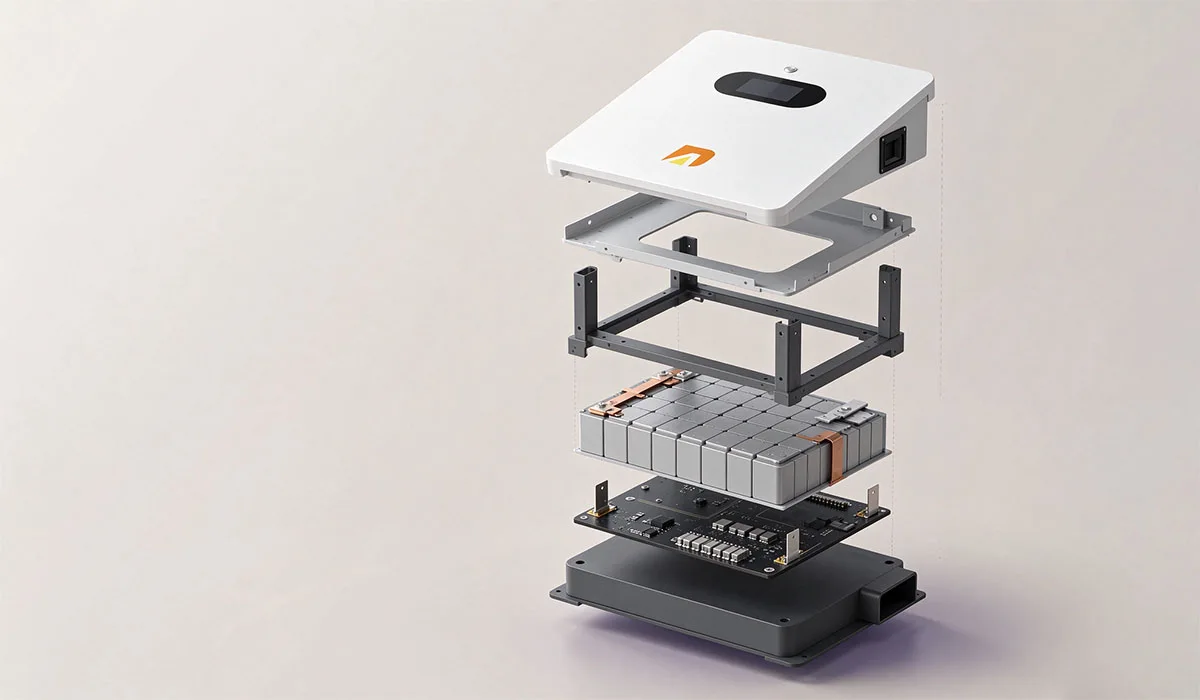
Difference Between Hybrid Inverter and PV Inverter (2026)
Difference Between Hybrid Inverter and PV Inverter (2026)
Difference Between a Hybrid Inverter and a PV Inverter
A hybrid inverter can manage solar panels, a battery, the grid, and selected loads in one system. A conventional grid-tied PV inverter converts panel DC into grid-synchronized AC, but usually cannot keep ordinary loads running when the utility fails. That is the practical difference between a hybrid inverter and a PV inverter: battery control and backup operation, subject to the model and system design.
One naming point first. “PV inverter” is a broad label for an inverter used with photovoltaic panels. It may refer to a string inverter, a microinverter, or another topology. In this comparison, we use “PV inverter” to mean a conventional grid-tied string inverter. Check the datasheet before comparing products.
Hybrid inverter vs. PV inverter: the quick comparison
A grid-tied PV inverter sends solar power to building loads and, where approved, the utility grid. A hybrid unit adds battery charging and discharging controls. Some hybrid models can also form a local backup supply during a grid outage. Others require additional equipment, a specific backup port, or careful commissioning.
| Comparison | Grid-tied PV inverter | Hybrid inverter |
|---|---|---|
| Main job | Convert PV power to AC and synchronize with the grid | Manage PV, battery, grid, and configured loads |
| Battery connection | Usually needs a separate battery inverter or retrofit system | Often has a dedicated battery input and charge controls |
| Grid outage behavior | Normally shuts down for anti-islanding protection | Can supply designated backup loads if designed and configured for it |
| Typical fit | Grid-connected solar where backup is not required | Solar-plus-storage projects, backup needs, or planned battery integration |
What happens when the grid goes down?
A standard grid-tied inverter generally disconnects when utility voltage disappears. That protects utility workers and prevents the inverter from energizing a line that should be dead. If the site needs power during an outage, ask whether the inverter can form an islanded supply and which circuits connect to it.
Do not assume “hybrid” means the whole building stays live. Backup power may be limited to a dedicated output. A large motor starting, an air compressor kicking in, or several loads switching on together can exceed that output even when the inverter’s headline rating looks adequate.
How each inverter handles solar and battery power
Conventional grid-tied PV inverter
Panels feed DC power to the inverter. Its MPPT inputs track the array’s operating point, then the unit converts that power to AC for local loads and, if permitted, export. The meter may run in either direction depending on site consumption and utility rules.
When the grid is absent, a typical grid-following inverter stops exporting. Solar production alone does not guarantee usable backup power. If storage is added later, the project may need an AC-coupled battery inverter, new protection, metering, and control coordination.
Hybrid inverter
A hybrid inverter coordinates PV generation with a compatible battery and the grid. Depending on the model, it can send solar power to loads, charge the battery, import from the grid, or discharge stored energy when configured to do so. It may also reserve an output for backup circuits.
The controls matter. Battery voltage range, BMS communication, charge current, grid code, export limit, and backup output all need to match the project. A unit with a battery port is not automatically compatible with every battery.
Which option fits your project?
Choose a PV inverter when the project is grid-first
A conventional PV inverter may suit a site with reliable utility service, no current battery plan, and a clear path for grid export or self-consumption. It can keep the equipment list and controls straightforward. If storage becomes a later requirement, price the retrofit path before purchase.
For a commercial roof, that means checking more than inverter cost. Look at string voltage over the site’s temperature range, MPPT allocation across roof orientations, AC output, protection devices, monitoring, and utility interconnection requirements.
Choose a hybrid inverter when storage is part of the brief
A hybrid inverter vs grid tie inverter decision often comes down to whether the site needs battery dispatch or backup. A hybrid design can reduce separate conversion stages in some architectures and simplify energy management. It may also cost more upfront and impose tighter compatibility requirements.
Consider a small production line with a control cabinet, network equipment, and a few lights that must stay on through short outages. The backup circuit should be sized around those loads and their starting behavior. It does not need to carry every heater and motor in the workshop.
For new solar-plus-storage projects, a hybrid inverter vs string inverter comparison should include battery capacity, charge and discharge limits, backup output, and how the equipment will be serviced. Do the arithmetic with the actual load profile. A “backup-ready” label is not a load study.
Can an existing PV inverter work with a battery?
Sometimes. The answer depends on the inverter and the retrofit architecture. An AC-coupled battery system uses a separate battery inverter on the AC side. A DC-coupled design routes PV and battery power through compatible DC equipment. Either approach needs controls and protection designed for the site.
So, can a PV inverter work with a battery? It may work as part of a battery system, but it may not connect directly to the battery. Check the existing inverter model, battery inverter requirements, meter or CT placement, export control, and outage behavior before quoting the retrofit.
If the system is being replaced, compare the installed cost of a new hybrid unit with the cost of keeping the PV inverter and adding compatible storage equipment. Include electrical labor, switchgear changes, commissioning, and any production downtime. The cheapest inverter line item may not produce the lowest project cost.
What to check before specifying a hybrid solar inverter
- PV input window: Check maximum DC voltage, operating voltage range, MPPT count, and input current against the module strings.
- Battery match: Confirm nominal voltage, usable voltage range, maximum charge and discharge current, approved battery models, and BMS protocol.
- Backup output: Verify continuous and surge ratings, phase arrangement, transfer behavior, and whether PV can continue charging the battery during an outage.
- Grid connection: Confirm local grid-code settings, export control, anti-islanding functions, and utility approval requirements.
- Site loads: List the loads that must stay on. Include motor starting current and the sequence in which equipment restarts.
- Service and documents: Request the current datasheet, wiring diagram, installation manual, warranty terms, and certificates applicable to the destination market.
For a hybrid solar inverter with battery backup, also ask for the backup circuit diagram. It should show exactly what remains powered, how neutral and grounding are handled, and what happens when the battery reaches its reserve limit. Those details belong in the submittal, before equipment ships.
Common buying mistakes
- Assuming every hybrid model exports: Some models support grid export; others are designed for self-consumption or backup without export. Confirm the exact model and firmware configuration.
- Reading “backup” as whole-site backup: Backup may be limited by a separate port, output rating, or transfer arrangement.
- Ignoring battery communication: Voltage compatibility alone does not prove that the inverter and battery BMS can communicate correctly.
- Comparing only rated kilowatts: MPPT current, surge capacity, phase balance, thermal derating, and operating temperature can decide whether the system fits.
- Leaving approvals until installation: Grid connection rules and accepted certificates vary by market. Verify the required documents with the local authority or utility.
The short answer
A grid-tied PV inverter converts solar power for a grid-connected system. A hybrid inverter adds battery management and may provide backup power when the system is designed for islanded operation. If outages, storage, or time-based energy use are part of the project, compare the complete system—not just the inverter label.
Send your PV array size, grid voltage and phase, battery plan, backup loads, and destination market to the SRNE team. We can help you check the inverter architecture and the parameters that need to match before you finalize a project specification.