What Is a Solid State Battery? Uses & Limits in 2026
What Is a Solid State Battery? Uses & Limits in 2026
What Is a Solid State Battery? How It Works, Benefits and Limitations
A solid state battery is a rechargeable battery that uses a solid electrolyte instead of the liquid or gel electrolyte found in conventional lithium-ion batteries. The solid electrolyte allows lithium ions to move between the anode and cathode during charging and discharging. It can also act as the separator between the two electrodes.
Why does this matter? Replacing a flammable liquid electrolyte with a solid material could improve battery safety, increase energy density and allow new battery designs using lithium-metal anodes.
However, there is a difference between promising laboratory results and a battery that can be manufactured reliably at commercial scale. Cost, electrode compatibility, manufacturing pressure and long-term cycle stability remain real engineering challenges.
For businesses evaluating energy storage, one question deserves attention: Is solid-state technology ready to replace established lithium-ion solutions such as LiFePO4? Let’s examine the technology, its limitations and what buyers should know before choosing a battery system.
1. What Is a Solid State Battery?
A solid state battery is an electrochemical energy storage device in which the electrolyte is solid rather than liquid. It still has the basic components found in rechargeable lithium batteries: an anode, a cathode and an electrolyte.
The difference is inside the cell.
In a conventional lithium-ion battery, a liquid electrolyte carries lithium ions between the electrodes. A porous separator keeps the electrodes from making direct electrical contact. In an all-solid-state design, a solid electrolyte performs the ion-conduction function and can also replace the conventional separator.
- Anode: The electrode from which lithium ions leave during discharge. Lithium metal and silicon-based materials are being investigated for advanced solid-state designs.
- Cathode: The positive electrode, often based on lithium-containing compounds.
- Solid electrolyte: A material that conducts lithium ions while preventing direct electronic contact between the electrodes.
- Current collectors: Conductive metal layers that transfer electrons between the cell and the external circuit.
One important distinction: solid-state describes the electrolyte architecture, not a single cathode chemistry. Different solid-state designs can use different electrode materials and cell configurations.
2. How Do Solid State Batteries Work?
The working principle is familiar to anyone who understands lithium-ion batteries. Lithium ions move through the electrolyte. Electrons travel through the external circuit. The difference is the material through which the ions move.
During Charging
When an external power source charges the cell, lithium ions move from the cathode through the solid electrolyte toward the anode. Electrons travel through the external charging circuit. Depending on the cell design, lithium is stored within the anode material or deposited as metallic lithium.
During Discharging
The reaction reverses. Lithium ions move from the anode through the solid electrolyte toward the cathode. Electrons flow through the connected load, supplying electricity to equipment, vehicles or other electrical systems.
The process repeats with each charge and discharge cycle. But maintaining good contact between solid materials is not easy. Unlike a liquid electrolyte, a solid electrolyte cannot simply flow into every small gap between electrode particles. Interface resistance and mechanical contact therefore require careful engineering.
This is one reason why a solid-state battery that performs well in a laboratory may need substantial development before it can operate reliably in a commercial battery pack.
3. Types of Solid State Battery Electrolytes
Not all solid electrolytes are made from the same material. Their chemical composition affects ionic conductivity, mechanical strength, manufacturing conditions and compatibility with the electrodes.
Three major material families are receiving considerable research attention.
Oxide-Based Solid Electrolytes
Oxide electrolytes are ceramic materials. Garnet-type LLZO, or Li7La3Zr2O12, is one widely studied example.
These materials can offer good chemical and thermal stability. That sounds attractive. The manufacturing side is harder. High-temperature sintering, grain boundaries and contact between ceramic layers must be carefully controlled.
Sulfide-Based Solid Electrolytes
Sulfide electrolytes are known for their potentially high lithium-ion conductivity. Some compositions can approach the conductivity of conventional liquid electrolytes.
There is a catch. Many sulfide materials are sensitive to moisture. Manufacturing and handling may require tightly controlled dry-room or inert-atmosphere conditions. Certain sulfide materials can also release hydrogen sulfide gas when exposed to moisture.
Polymer-Based Solid Electrolytes
Polymer electrolytes are made from ion-conducting polymer materials. They offer processing flexibility and can be easier to manufacture into thin layers than some ceramic alternatives.
The trade-off is ionic conductivity. Certain polymer electrolytes perform better at elevated temperatures, which introduces additional requirements for cell heating and thermal management.
Researchers are also developing composite electrolytes that combine different material families to improve conductivity, flexibility and interface stability.
| Electrolyte Type | Main Characteristics | Engineering Challenges |
|---|---|---|
| Oxide | Good thermal and chemical stability | Sintering, brittleness and interface resistance |
| Sulfide | High potential ionic conductivity | Moisture sensitivity and handling requirements |
| Polymer | Flexible and potentially easier to process | Room-temperature ionic conductivity |
| Composite | Combines properties of different materials | Material compatibility and manufacturing consistency |
4. Advantages and Disadvantages of Solid State Batteries
Why are battery manufacturers investing so much in this technology? The potential is significant. But a good engineering assessment needs to consider both sides.
Potential Advantages
- Improved safety potential: Replacing flammable liquid electrolyte with a solid material can reduce leakage and ignition risks associated with liquid electrolytes.
- Higher energy density: Certain designs using lithium-metal anodes could store more energy per unit of weight or volume.
- New cell configurations: Solid electrolyte technology may support compact cell architectures and bipolar stacking.
- Potentially longer service life: Some designs may reduce unwanted side reactions, although actual cycle life depends on materials and cell engineering.
- New application possibilities: High-energy-density designs could benefit electric vehicles, aerospace equipment and specialized energy storage applications.
Current Limitations
- High manufacturing cost: Specialized materials, controlled production environments and additional processing steps can increase production expenses.
- Interface resistance: Maintaining stable contact between solid electrodes and solid electrolytes remains a difficult problem.
- Mechanical pressure: Some cell designs require external pressure to maintain contact during charging and discharging.
- Manufacturing scale: Laboratory cell performance does not automatically translate into consistent mass production.
- Material compatibility: Electrolytes and electrode materials must remain chemically and mechanically compatible throughout the cell’s service life.
- Temperature sensitivity: Some electrolyte systems have restricted operating-temperature windows or require additional thermal management.
One point is worth remembering. A solid electrolyte does not make every battery failure impossible. Internal short circuits, mechanical damage and chemical instability still need to be considered in cell design and system-level safety testing.
5. Solid State Battery vs Lithium Ion Battery vs LiFePO4
These terms are often used as if they describe three competing battery chemistries. They do not.
Solid-state describes the electrolyte structure. Lithium-ion describes a family of rechargeable battery technologies. LiFePO4 identifies a particular lithium-ion cathode chemistry, also known as lithium iron phosphate or LFP.
This distinction matters when comparing commercial battery products.
| Comparison | Conventional Lithium-Ion | LiFePO4 (LFP) | All-Solid-State |
|---|---|---|---|
| Electrolyte | Liquid | Liquid in conventional commercial LFP cells | Solid |
| Cathode Chemistry | Various lithium-based materials | Lithium iron phosphate | Depends on cell design |
| Technology Maturity | Commercially established | Commercially established | Still developing at scale |
| Safety Profile | Depends on chemistry and system design | Good thermal stability compared with many conventional lithium-ion chemistries | Potential reduction in liquid-electrolyte-related fire risks |
| Energy Density | Varies by chemistry and cell design | Generally lower than high-energy NMC cells | Higher density is a development target for some designs |
| Commercial Energy Storage | Established applications | Proven and widely deployed solution | Future potential; project-level economics and availability need verification |
There is an important chemistry issue here. Not every solid-state electrolyte is compatible with every cathode. For example, certain thiophosphate-based solid electrolytes can react unfavorably with LiFePO4. A solid-state cell cannot simply be made by replacing the liquid electrolyte in any existing LFP cell with a solid material.
For manufacturers and project developers, this is a materials-engineering issue, not just a marketing distinction.
6. Are Solid State Batteries Ready for Commercial Energy Storage in 2026?
The short answer: not yet as a broadly established replacement for conventional lithium-ion storage.
There has been real progress. Some semi-solid battery products are already commercially available. All-solid-state cells are also being produced in small quantities for testing and development. But large-scale manufacturing and reliable integration into commercial battery systems remain difficult.
The International Energy Agency’s Global EV Outlook 2026 highlights the distinction between semi-solid, almost-solid and all-solid-state designs. It also points to manufacturing complexity, higher costs and mechanical requirements as remaining challenges.
For stationary storage, the decision is even more demanding than for a small electronic device.
Consider a factory using a 200 kWh battery system. The battery may charge during periods of low electricity prices and discharge when production equipment starts or electricity tariffs rise.
The project engineer needs to check much more than cell energy density:
- Daily energy throughput: How many kWh must the system deliver each day?
- Discharge power: Can the battery and PCS handle the factory’s peak load?
- Usable capacity: What energy remains available after applying the specified DoD and operating limits?
- Cycle life: How many cycles are guaranteed under the actual temperature, DoD and C-rate conditions?
- Thermal management: Does the installation require air cooling, liquid cooling or additional heating?
- System compatibility: Are the BMS, PCS, EMS and protection equipment designed to work together?
A high-density cell is not automatically the cheapest storage system. For a stationary project, delivered energy over the system’s service life can matter more than the headline Wh/kg figure.
A Simple Project Economics Example
Suppose a commercial facility needs 200 kWh of usable energy per day. Its annual energy requirement from the battery is:
200 kWh × 365 days = 73,000 kWh per year.
If the system delivers that energy for 10 years, the cumulative delivered energy is 730,000 kWh, assuming the same daily throughput and ignoring degradation for this simplified example.
Now compare two battery proposals. One may have a higher initial purchase price but a longer warranted service life. Another may cost less but require earlier replacement or additional maintenance.
The useful purchasing metric is the levelized cost of storage (LCOS), calculated using the total lifecycle costs and energy delivered, with appropriate treatment of discount rate, replacement, efficiency and degradation.
Do not compare two batteries using purchase price alone. Ask for the operating assumptions behind every claimed cycle-life figure.
7. What Should Buyers Check Before Purchasing a Battery?
Battery specifications can look impressive on a quotation sheet. That does not mean the proposed system is suitable for your installation.
Whether you are purchasing residential batteries, an industrial battery cabinet or a containerized energy storage system, check the following information before placing an order.
- Cell chemistry: Confirm whether the product uses LFP, NMC, semi-solid or genuinely all-solid-state technology.
- Cell manufacturer: Request the manufacturer’s name, model number and traceability information.
- Rated and usable capacity: Check whether the quoted kWh value is nominal or usable capacity.
- Cycle-life conditions: Verify DoD, temperature, charge/discharge rate and end-of-life capacity criteria.
- Safety documentation: Review applicable UN38.3, MSDS and IEC 62619 documentation. Verify that certificates and test reports correspond to the actual product.
- System integration: Confirm BMS communication, PCS compatibility, protection functions and EMS requirements.
- Warranty: Check the warranty period, throughput limits, operating conditions and exclusions.
- Shipping requirements: Confirm the applicable dangerous-goods classification, packaging and transport documentation with the supplier and carrier.
One more practical point. Ask for the exact battery model before discussing a project price. A 100 kWh DC battery cabinet and a 100 kW / 200 kWh integrated system are not interchangeable products.
For a commercial energy storage project, the battery, PCS, control strategy and installation conditions must be evaluated together.
8. Frequently Asked Questions About Solid State Batteries
Are solid state batteries better than lithium-ion batteries?
They have potential advantages, especially in energy density and reducing risks associated with liquid electrolytes. However, conventional lithium-ion batteries currently have a more mature manufacturing and supply chain. The better choice depends on application, price, safety requirements and product availability.
Do solid state batteries use lithium?
Yes. Many solid-state battery designs are lithium-based. Lithium ions move through the solid electrolyte during charging and discharging. Some advanced designs also investigate metallic lithium as the anode material.
Are solid state batteries completely safe?
No battery technology is completely risk-free. Solid electrolytes can reduce certain hazards associated with flammable liquid electrolytes, but mechanical failure, internal short circuits, material instability and other failure mechanisms still require careful engineering and testing.
What is the difference between semi-solid and all-solid-state batteries?
Semi-solid batteries retain some liquid or gel electrolyte components, depending on the design. All-solid-state batteries use solid electrolytes without a liquid electrolyte phase. Always check the manufacturer’s technical definition rather than relying on the product name alone.
Are solid state batteries suitable for solar energy storage?
They may become useful in future stationary storage applications. However, commercial solar storage projects today need proven capacity, cycle life, system compatibility, warranty support and competitive lifecycle costs. Established lithium-ion technologies, including LFP, remain practical choices for many projects.
Is LiFePO4 a solid state battery?
No. Conventional commercial LiFePO4 batteries use a liquid electrolyte. LiFePO4 refers to the lithium iron phosphate cathode chemistry, while solid-state refers to the electrolyte architecture. They describe different aspects of battery design.
How long do solid state batteries last?
There is no single standard lifespan for all solid-state batteries. Cycle life depends on electrolyte composition, electrode materials, operating temperature, charging rate and mechanical stability. Buyers should request independently supported cycle-life data for the exact cell or battery model.
9. Final Thoughts: Choosing the Right Battery Technology
Solid-state battery technology is promising, but commercial readiness matters more than laboratory performance.
Higher energy density and improved safety potential make solid-state batteries worth watching. Yet manufacturing costs, material compatibility, interface stability and long-term performance still need to be proven across large production volumes.
For businesses installing solar energy storage, backup power or industrial peak-shaving systems, established LiFePO4 technology offers a practical option with a mature supply chain and extensive commercial experience.
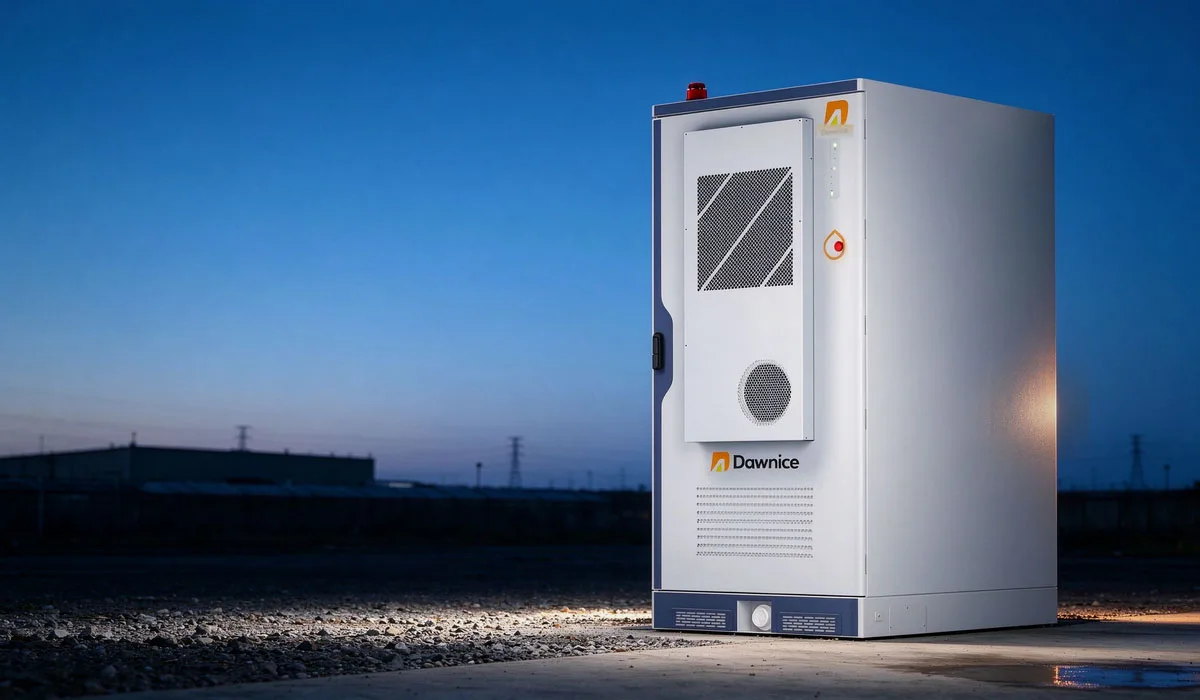
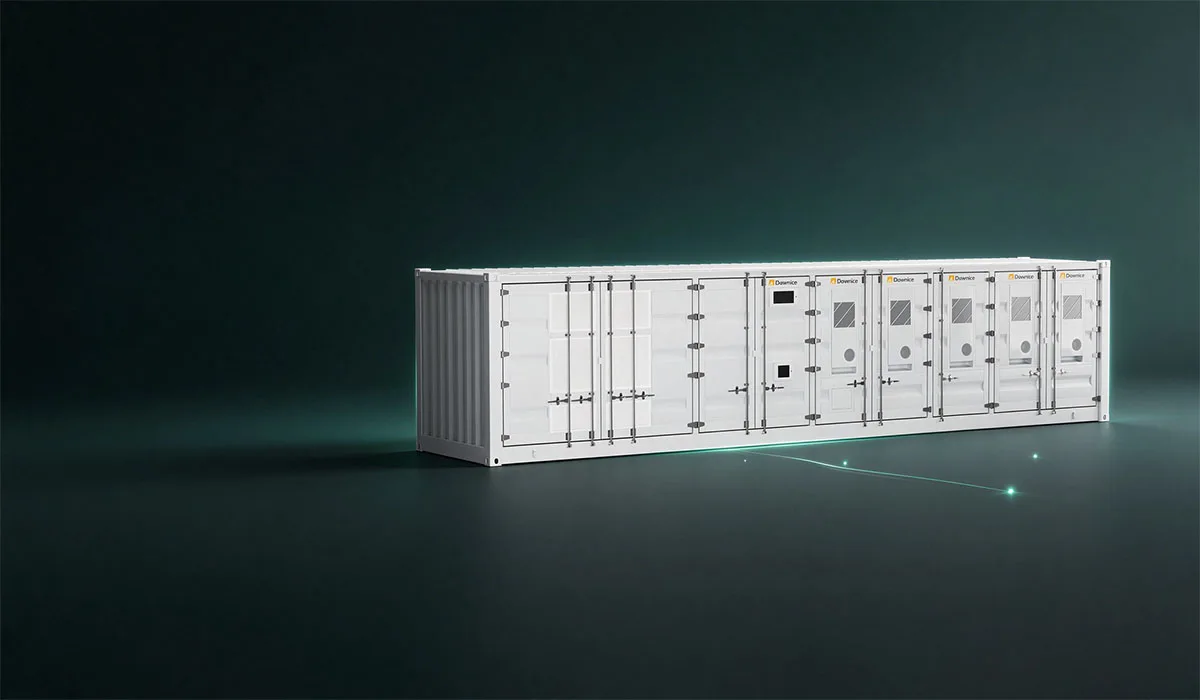
At Dawnice, we focus on lithium iron phosphate energy storage solutions for residential and commercial applications. Our product range includes 5–21 kWh residential battery systems and 100–265 kWh commercial and industrial solutions, with configurations selected according to project requirements.
Planning a battery storage project? Share your required capacity, operating conditions, installation location and expected daily energy consumption. Our team can help you evaluate a suitable battery configuration.
Contact Dawnice to discuss your residential or commercial energy storage requirements.
Visit Dawnice – Energy Storage Battery Manufacturer
Technical references: