What Is a Watt? Power, Energy & Battery Guide
What Is a Watt? Power, Energy & Battery Guide
What Is a Watt? Understanding Power, Energy and Battery Capacity
A watt (W) is a unit of power. It tells you how quickly electrical energy is being used or produced at a particular moment. One watt equals one joule per second (1 W = 1 J/s).
But what does that actually mean when you are looking at a solar panel, an inverter or a home battery?
Here is the simple distinction: watts measure power, while watt-hours measure energy. A 5,000 W inverter describes how much power it can deliver. A 10 kWh battery describes how much energy it can store. These numbers are related, but they do not tell you the same thing.
If you are comparing electrical equipment or planning a solar energy storage system, understanding this difference will save you from some expensive sizing mistakes. Let’s break it down with practical examples.
What Is a Watt and What Does It Measure?
A watt is the standard SI unit of power. It measures the rate at which energy is transferred, consumed or generated.
Think about a water pump in a factory. One pump moves water slowly, while another moves a much larger volume in the same amount of time. The second pump has a higher flow rate.
Electrical power works in a similar way. A device with a higher wattage generally requires more power to operate at that moment.
For example:
- 5 W: A small LED indicator or low-power electronic device.
- 60 W: A traditional household light bulb.
- 1,000 W: An electric heater operating at one kilowatt.
- 5,000 W: A large electrical load or a high-power residential appliance combination.
So, when someone asks what are watts, the answer is straightforward: watts tell us the rate of power consumption or production. They do not tell us how much electricity has been used over an entire day.
Why Is a Watt Called a Watt?
The unit is named after James Watt, a Scottish engineer and inventor whose work contributed significantly to the development of the steam engine.
The symbol is an uppercase W. Write 100 W, not 100 w, when specifying electrical power.
How Is a Watt Calculated?
For a simple DC electrical circuit, power is calculated by multiplying voltage by current.
Power (W) = Voltage (V) × Current (A)
This is one of the most useful formulas in electrical engineering. You will see it when checking battery specifications, inverter ratings, DC cables and solar equipment.
Example: Calculating Power From Voltage and Current
Suppose a battery system operates at 51.2 V and supplies 100 A of current.
51.2 V × 100 A = 5,120 W
The calculated electrical power is 5,120 W, or 5.12 kW.
That is the basic calculation. In an actual battery installation, however, you also need to check the battery management system (BMS), maximum continuous discharge current, cable capacity and inverter operating limits. A mathematical result does not automatically mean the equipment can safely deliver that output continuously.
For AC equipment, the calculation can be different. In a single-phase AC circuit, real power is generally calculated as voltage × current × power factor (PF). This matters when dealing with motors, pumps and industrial equipment.
What Is kW? Understanding Kilowatts
A kilowatt (kW) is simply a larger unit of power. The prefix “kilo” means one thousand.
1 kW = 1,000 W
Why use kilowatts instead of watts? Because writing 5,000 W every time becomes inconvenient when discussing larger electrical systems.
For example, a residential solar installation might have a rated capacity of 6 kW, while a commercial battery inverter could have a rated output of 100 kW or more.
Watt, Kilowatt, Megawatt and Gigawatt Conversion
| Power Unit | Symbol | Equivalent in Watts | Typical Application |
|---|---|---|---|
| Watt | W | 1 W | Small electrical devices |
| Kilowatt | kW | 1,000 W | Household and commercial systems |
| Megawatt | MW | 1,000,000 W | Large industrial and utility projects |
| Gigawatt | GW | 1,000,000,000 W | National electricity generation capacity |
If you are researching what is kW in the context of solar energy, remember that kW usually describes the rated power of a system. It does not tell you how much energy the system will produce or store throughout the day.
What Is a Watt-Hour? Watts vs. Watt-Hours
This is where many people get confused.
A watt measures power. A watt-hour (Wh) measures energy. The difference is time.
One watt-hour represents the energy transferred when a device operates at one watt for one hour.
Energy (Wh) = Power (W) × Time (hours)
Let’s use a simple example.
You have a 100 W light bulb. It stays on for five hours.
100 W × 5 hours = 500 Wh.
The bulb has consumed 500 Wh of electrical energy during that period, assuming it operates continuously at its rated power.
Notice something? Its power rating remains 100 W. The accumulated energy changes with operating time.
What Does Wh Mean on a Battery?
When you look at a battery specification sheet, Wh tells you its nominal energy capacity.
For instance, a battery rated at 1,000 Wh theoretically stores enough energy to supply a 100 W load for ten hours under ideal conditions.
Actual runtime will be shorter in many installations. Inverter losses, discharge limits, temperature and battery operating conditions all affect the usable energy.
This is why battery manufacturers generally specify capacity in Wh or kWh rather than simply listing the wattage.
Watt-Hour vs. Kilowatt-Hour
A kilowatt-hour (kWh) equals 1,000 watt-hours.
1 kWh = 1,000 Wh
For everyday electricity consumption, kWh is the unit you usually see on your electricity bill. For solar batteries, it is one of the most important figures used to describe storage capacity.
| Measurement | Watt (W) | Watt-Hour (Wh) | Kilowatt-Hour (kWh) |
|---|---|---|---|
| Measures | Power | Energy | Energy |
| Time included? | No | Yes | Yes |
| Typical application | Inverter output | Small battery capacity | Home and commercial battery capacity |
| Conversion | 1 W | 1,000 Wh = 1 kWh | 1,000 Wh |
How to Calculate Watt Hours and Battery Capacity
Now let’s move away from textbook examples.
Imagine you are preparing a backup power system for a small warehouse. The customer has several lights, computers, a refrigerator and a few essential electrical devices. They want to know how large a battery they need.
You cannot choose a battery by looking at the total wattage alone. First, you need to estimate the energy consumption over the required backup period.
Step 1: Calculate the Energy Consumption of Each Load
Assume the warehouse has the following essential electrical loads:
| Electrical Equipment | Power | Daily Operating Time | Daily Energy |
|---|---|---|---|
| LED Lighting | 200 W | 8 hours | 1.6 kWh |
| Computers | 300 W | 8 hours | 2.4 kWh |
| Refrigerator | 150 W average | 10 hours equivalent | 1.5 kWh |
| Network Equipment | 100 W | 24 hours | 2.4 kWh |
| Total | 750 W rated example load | Varies by device | 7.9 kWh/day |
The estimated daily energy requirement is 7.9 kWh. Notice that this is not the same as the maximum simultaneous power demand. That distinction matters when choosing an inverter.
Step 2: Calculate the Required Battery Capacity
Let’s assume the customer wants approximately 10 hours of backup for a continuous average load of 800 W.
First, calculate the energy requirement:
800 W × 10 hours = 8,000 Wh = 8 kWh
But ordering an 8 kWh battery would leave little room for operating limits and conversion losses.
Assume the battery system has a 90% usable depth of discharge (DoD), and the inverter has 92% conversion efficiency.
Required nominal battery capacity = 8 kWh ÷ (0.90 × 0.92)
Required nominal capacity ≈ 9.66 kWh
A battery around 10 kWh nominal capacity could be a reasonable starting point for this example. The final selection still depends on load variation, reserve requirements, temperature and the manufacturer’s discharge specifications.
Step 3: Check the Inverter Power Rating
Here is another detail that people sometimes overlook.
A battery may have enough stored energy to operate a load for ten hours, but that does not guarantee it can supply the required instantaneous power.
Suppose the customer uses a 3 kW inverter. The battery must be capable of supplying the required DC power, including the inverter’s losses, without exceeding its BMS discharge limits.
Motors and compressors also introduce starting current. A refrigerator that normally consumes 150 W may briefly demand considerably more power when its compressor starts.
That is why battery capacity (kWh) and inverter power (kW) must be checked separately.
How Do Watts Apply to Solar Panels and Energy Storage?
Now we can connect the basic electrical units to a real solar energy system.
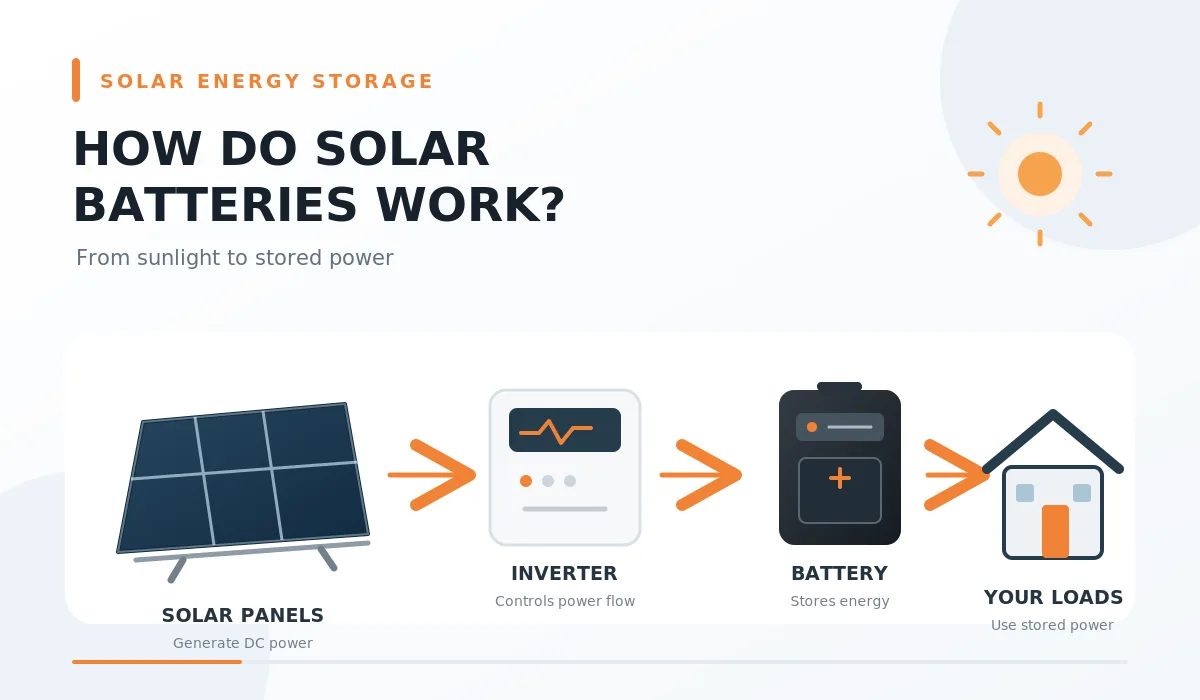
Solar panels are generally rated in watts. Batteries are commonly rated in kilowatt-hours. Inverters are rated in kilowatts or kVA, depending on the specification.
Each component has a different job.
Solar Panel Wattage and Actual Electricity Generation
Consider a solar panel rated at 350 W under standard test conditions (STC).
If it could operate continuously at its rated output for five hours, its theoretical energy production would be:
350 W × 5 hours = 1,750 Wh = 1.75 kWh
Real production is different. Sunlight intensity, panel temperature, shading, orientation, dust and system losses all affect the output.
A panel rated at 350 W does not produce 350 W throughout the entire day. That is its rated output under specified test conditions, not a guaranteed daily production figure.
Battery Capacity: What Does 51.2 V and 200 Ah Mean?
Let’s take a common low-voltage lithium battery specification used in solar energy storage systems.
Assume a battery has:
- Nominal voltage: 51.2 V
- Rated capacity: 200 Ah
- Battery chemistry: LiFePO4
How do we calculate its energy capacity?
Battery Energy (Wh) = Voltage (V) × Capacity (Ah)
51.2 V × 200 Ah = 10,240 Wh.
That gives us a nominal energy capacity of 10.24 kWh.
This is why Ah alone is not enough when comparing batteries with different nominal voltages. A 200 Ah battery at 12.8 V and a 200 Ah battery at 51.2 V do not have the same energy capacity.
Always compare voltage and amp-hour capacity together, or compare the resulting kWh rating.
Watt vs. Ampere vs. Volt: What Is the Difference?
These three electrical units appear together on almost every battery or inverter specification sheet. They are related, but each describes a different electrical property.
| Electrical Unit | Symbol | What It Measures | Example |
|---|---|---|---|
| Watt | W | Electrical power | 1,000 W heater |
| Volt | V | Electrical potential difference | 51.2 V battery |
| Ampere | A | Electrical current | 100 A discharge current |
| Amp-Hour | Ah | Electric charge capacity | 200 Ah battery |
For battery systems, the relationship between these units helps engineers calculate power output, cable requirements and nominal energy capacity.
One practical point: Ah is not a direct substitute for kWh. You need the battery voltage to calculate energy capacity.
Common Mistakes When Reading Electrical Specifications
After working with electrical equipment, you start noticing the same misunderstandings in project discussions. Here are four worth checking before placing an equipment order.
- Confusing kW with kWh: A 10 kW inverter and a 10 kWh battery describe different things. One refers to power, the other to stored energy.
- Ignoring starting current: Motors, pumps and compressors may require considerably more power during startup than during normal operation.
- Assuming rated battery capacity is fully usable: DoD, reserve settings, conversion losses and battery operating limits affect the available energy.
- Comparing batteries using Ah alone: Always check nominal voltage before comparing amp-hour ratings.
These are not just technical details. They influence equipment selection, system reliability and the final project cost.
Choosing the Right Battery System for Your Energy Requirements
Understanding watts and watt-hours is a good starting point. Selecting the right energy storage system requires a few more checks.
At Dawnice, we work with residential, commercial and industrial energy storage applications. Different projects require different battery capacities, discharge capabilities and inverter configurations.
A household looking for overnight backup has different requirements from a factory trying to support production equipment during a grid outage.
Before selecting a battery system, we recommend checking:
- Total energy demand: Calculate the expected consumption in kWh during the backup period.
- Maximum power demand: Identify the highest simultaneous load in kW.
- Starting power: Check the surge requirements of motors, compressors and other inductive loads.
- Battery voltage and capacity: Confirm that the battery configuration matches the inverter requirements.
- Discharge capability: Verify the continuous and peak discharge limits specified by the manufacturer.
- Expansion requirements: Consider whether the system needs additional battery capacity as energy demand grows.
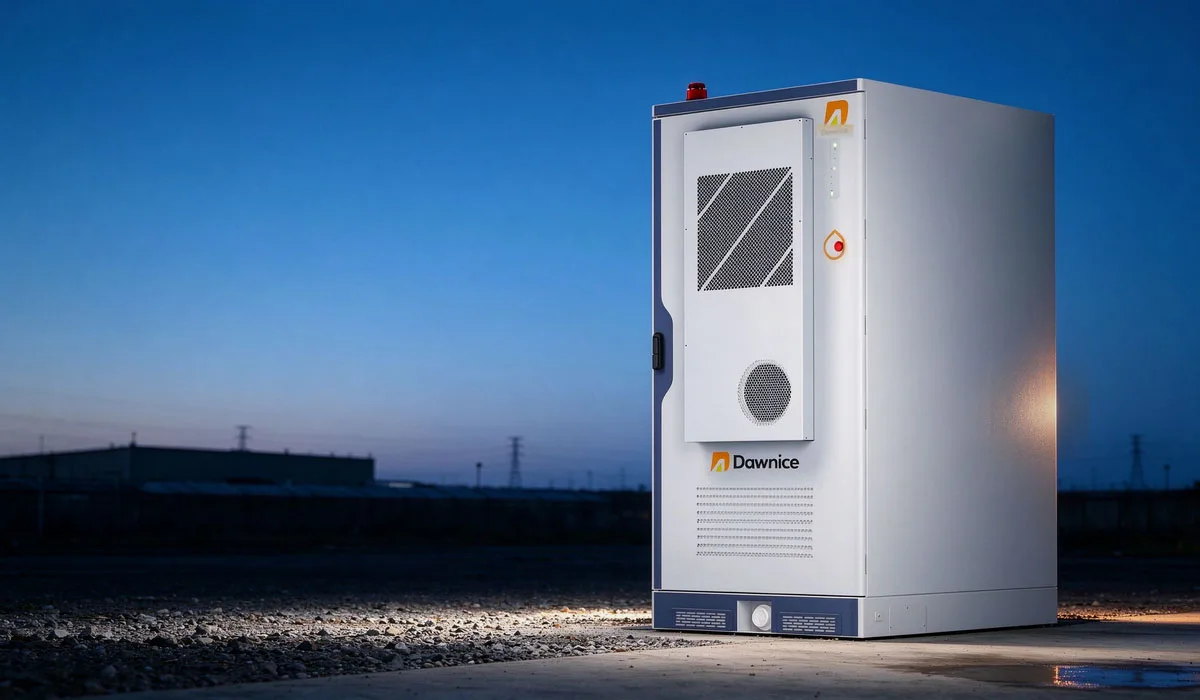
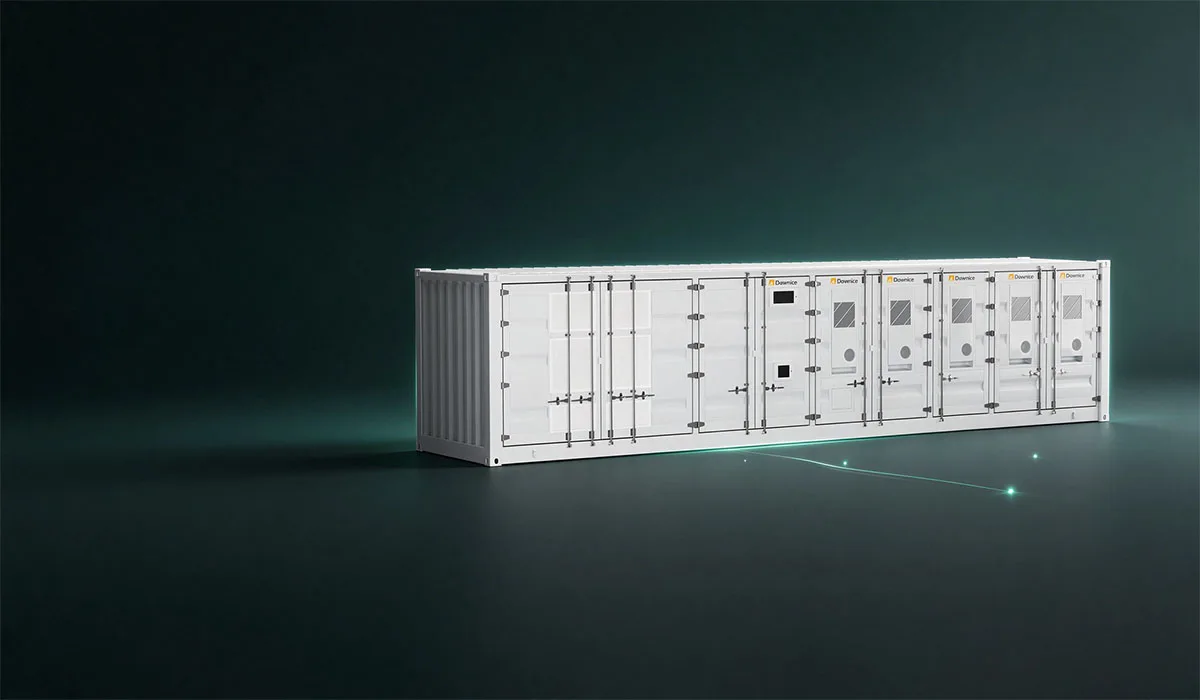
For commercial and industrial projects, liquid-cooled or air-cooled battery energy storage solutions may also be considered depending on system size, installation conditions and thermal management requirements.
There is no universal battery configuration that works for every project. The load profile comes first. Equipment selection follows.
If you are sourcing lithium battery systems for a residential, commercial or industrial project, the Dawnice team can help you review your application requirements and explore suitable energy storage configurations.
Looking for a battery storage solution for your next project? Contact Dawnice to discuss your required power output, energy capacity and system configuration.
Contact Dawnice for Energy Storage Solutions
Frequently Asked Questions About Watts
1. What Is One Watt Equal To?
One watt equals one joule per second (1 W = 1 J/s). In a simple DC circuit, one watt is also equal to one volt multiplied by one ampere.
2. Is a Watt a Unit of Energy or Power?
A watt is a unit of power, not energy. It measures the rate at which energy is transferred or consumed. Energy is measured in joules, watt-hours or kilowatt-hours.
3. How Many Watts Are in One Kilowatt?
One kilowatt equals 1,000 watts. For example, a 3 kW inverter has a rated power of 3,000 W.
4. What Does Wh Mean in Electricity?
Wh stands for watt-hour. It is a unit of energy that measures the amount of energy transferred or consumed over time. A 100 W device operating for five hours consumes 500 Wh.
5. How Many kWh Does a 1,000-Watt Device Use in One Hour?
A 1,000 W device operating continuously for one hour consumes 1 kWh of energy. If it operates for five hours under the same conditions, consumption increases to 5 kWh.
6. How Do I Calculate the Watt-Hours of a Battery?
Multiply the battery’s nominal voltage by its rated capacity in amp-hours. For example, a 51.2 V, 200 Ah battery has a nominal energy capacity of 10,240 Wh, or 10.24 kWh.
7. Does a Higher Wattage Mean Higher Electricity Consumption?
Generally, a device with a higher wattage consumes energy at a faster rate when operating. However, total electricity consumption also depends on operating time. A 2,000 W heater running for 30 minutes consumes the same theoretical energy as a 1,000 W heater running for one hour.
8. Can a 10 kWh Battery Run a 5 kW Load?
In principle, a 10 kWh battery has enough nominal energy to supply a 5 kW load for two hours under ideal conditions. Actual runtime will be shorter because of usable capacity limits and conversion losses. The battery’s continuous discharge power and BMS limits must also support the required load.
9. What Is the Difference Between Watts and Amps?
Amps measure electrical current, while watts measure electrical power. In a simple DC circuit, power is calculated by multiplying voltage by current. Therefore, the same current can produce different power levels at different voltages.
10. How Many Watts Does a Solar Panel Produce?
It depends on the panel’s rated capacity and operating conditions. A 350 W solar panel is rated to produce 350 W under standard test conditions. Actual output changes with sunlight, temperature, shading, orientation and other system factors.
Understanding watts is the first step toward understanding how electricity works. Once you know the difference between power and energy, comparing solar panels, inverters and battery storage systems becomes much easier.