Blog
Blog
Power Up Smartly: What Size Home Battery Storage Do You Really Need?
Published by Dawnice, January 8, 2026
Why Battery Size Matters More Than Brand
When people start searching for a home battery system, the first question is rarely about brand—it’s about size. Choosing the wrong battery capacity can lead to wasted money or insufficient backup during a power outage. Whether you want a solar battery backup for house use or a whole house battery generator, understanding battery sizing is the foundation of a reliable home energy solution.
What Are Storage Batteries Rated In?
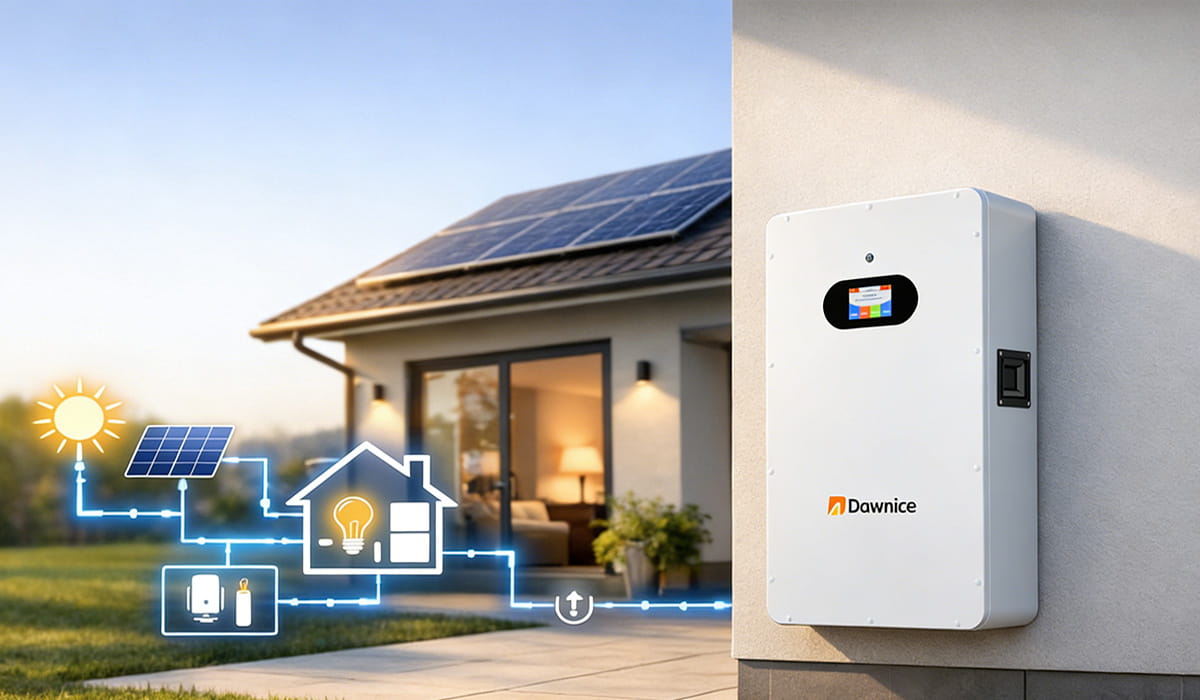
Home battery storage systems are typically rated in kilowatt-hours (kWh), not volts or amps. kWh tells you how much energy the battery can store and deliver over time. For example, a 10 kWh home battery can theoretically power a 1 kW load for 10 hours. This is the key unit behind every residential battery energy storage system.
Start With Your Real Power Needs at Home
Before asking “what size battery do I need,” you should list what you actually want to power. Some households only need backup battery power for lights, Wi-Fi, and refrigerators. Others want a whole home solar battery backup that supports air conditioning, pumps, or electric cooking. The more appliances you include, the larger your house battery bank must be.
Estimating Battery Size for Power Outages
If your goal is emergency backup during outages, calculate how many hours you want power and which loads are essential. A small backup battery for power outage scenarios might be 5–10 kWh. For longer outages, especially in areas with unstable grids, 15–30 kWh of battery storage for house power is far more practical.
Battery Size for Solar-Powered Homes
For solar users, battery sizing is closely linked to daily energy consumption. A common rule is to match battery capacity to one day of critical usage. This approach works well for home solar battery storage systems and off-grid battery banks. A proper battery calculation for solar ensures your solar power battery for home use doesn’t sit underutilized or fall short at night.
Whole House vs Partial Backup: Know the Difference
A whole house solar battery bank is very different from a partial backup system. Whole-home systems require larger battery banks and higher inverter capacity, while partial systems focus on essential circuits only. Many homeowners mistakenly overspend by choosing the biggest battery for home use without defining their real backup goals.
Lithium Batteries vs Portable Battery Packs
Lithium battery generators and portable emergency battery packs are useful for short-term or mobile use, but they are not designed for long-duration household backup. A fixed home battery storage solar system offers better efficiency, scalability, and safety compared to plug-and-play battery packs or 120V battery backup units.
How Much Battery Storage Do Most Homes Need?
For most modern households, the sweet spot is between 10 kWh and 20 kWh. This range covers typical evening loads, basic air conditioning, and essential appliances. Larger homes or off-grid users may need 30 kWh or more, especially when aiming for energy independence rather than simple backup.
Oversizing vs Undersizing: Common Mistakes to Avoid
Oversizing increases upfront cost without improving performance, while undersizing leads to frustration during outages. The best home battery backup system is not the largest—it’s the one that fits your lifestyle, solar production, and outage risk. A balanced home electric battery setup always starts with realistic expectations.
Final Thoughts: Choose Battery Size With Confidence
So, what size battery backup do you need? The answer depends on your daily energy use, outage duration, and whether solar is involved. With proper planning, a well-sized residential battery energy storage system can protect your home, reduce electricity bills, and deliver long-term peace of mind.